Night sky this week through October 2, 2026: all is officially here, and the night sky is changing right along with the seasons. This week brings a beautiful Harvest Moon, bright planets, and some familiar fall constellations. Grab a lawn chair and look up!
🌕 The Harvest Moon
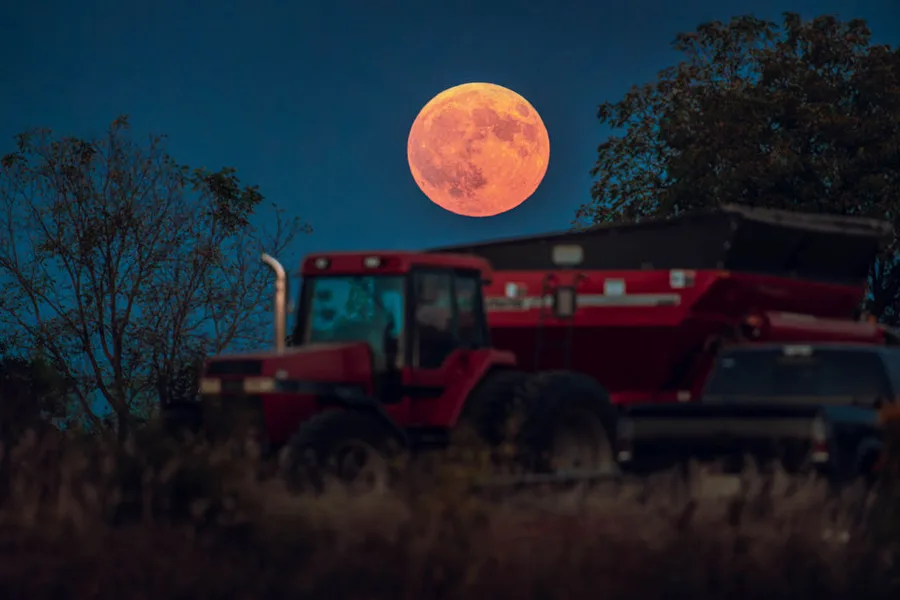
The Full Harvest Moon arrives Saturday, September 26. The Harvest Moon is the full Moon closest to the autumnal equinox, which occurred September 22 this year.
So why is it called the Harvest Moon? Around the time of the fall equinox, the Moon rises only a little later from one evening to the next. Instead of the usual roughly 50-minute difference, the interval can be closer to 25–30 minutes in much of the Northern Hemisphere. That meant farmers traditionally had several evenings of extra moonlight to continue harvesting crops after sunset—before electric lights were available.
🪐 Night Sky: Venus, Mercury, & Saturn
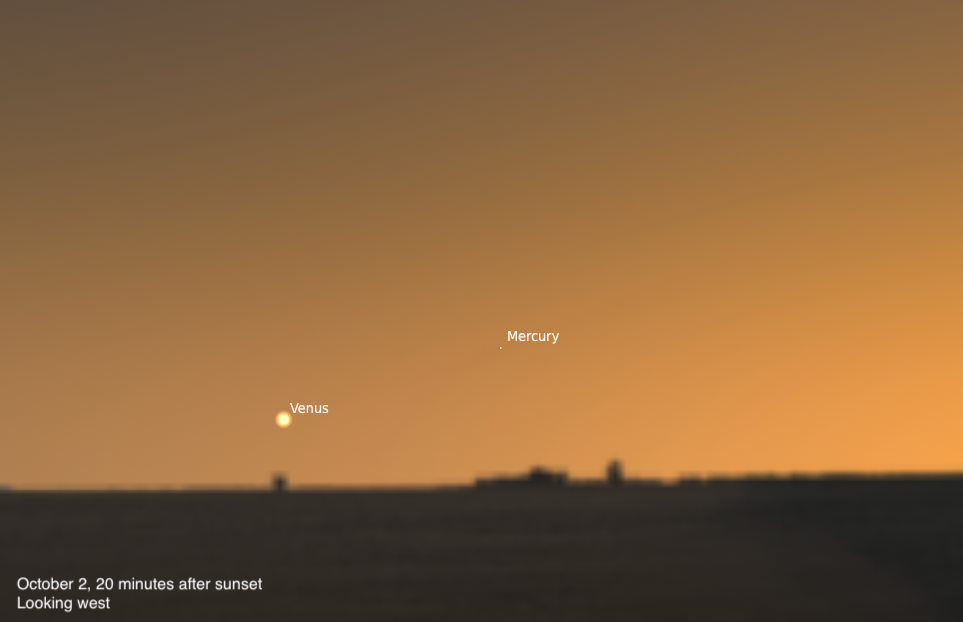
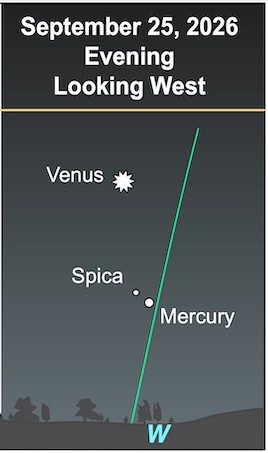
Venus still shines brightly low in the western sky just after sunset, though it is becoming increasingly difficult to see as it moves closer to the Sun. Find a location with a clear western horizon.
When you look at bright Venus, look to the right to catch fleeting Mercury.
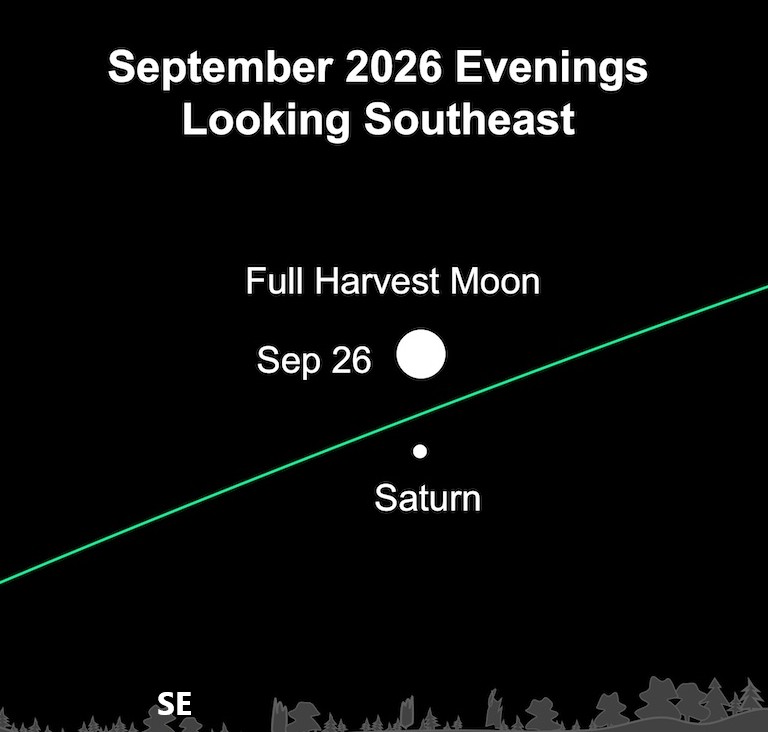
Saturn is the evening highlight. It rises in the east around sunset and remains visible most of the night. Saturn reaches opposition on October 4, just after this week’s time frame, so late September and early October are excellent for viewing it. A small telescope can reveal its famous rings and, with good conditions, its largest moon. The Full Harvest Moon will rise near Saturn, making a particularly nice sight in the eastern sky after sunset on Saturday.
🌅 Morning Sky: Mars & Jupiter
If you’re an early riser, look toward the eastern sky before sunrise.
Mars rises around 1–2 a.m. and has a noticeable reddish-orange color. It will become increasingly interesting over the coming months as it approaches its next opposition in February 2027.
Jupiter rises around 3 a.m. and is much brighter than Mars. With binoculars or a small telescope, you may be able to see its four largest moons—Io, Europa, Ganymede, and Callisto.
✨ Constellation of the Week: Lyra
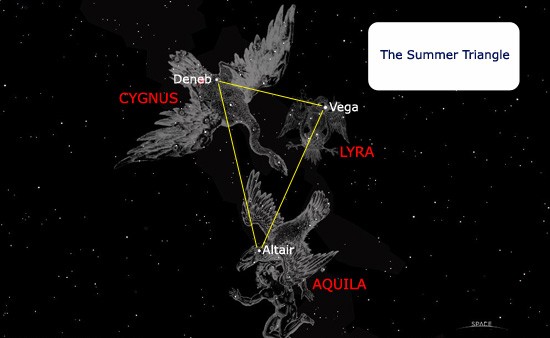
Overhead in the evening sky is Vega, the brightest star in Lyra. Vega is one of the three stars of the Summer Triangle, along with Deneb in Cygnus and Altair in Aquila.
Lyra represents a lyre, the musical instrument associated with Orpheus in Greek mythology. Once you find bright Vega, look for the smaller group of stars surrounding it that forms the constellation.
🌠 Until Next Week in the Night Sky this Week…
Fall nights are getting longer, making this a great time to spend a few minutes outside. Look for the Harvest Moon and Saturn on September 26, catch Venus before it sinks into the twilight, and set the alarm for Mars and Jupiter in the morning.
You can see fall coming. The tomatoes that once stood tall and proud are now leaning in every direction, looking like they’ve had a long week. The pepper plants are still producing, apparently unaware that frost is just around the corner. And the zucchini? Well, the zucchini has decided that if it’s going down, it’s taking the whole neighborhood with it.
Here in South Dakota, autumn doesn’t always ease into the garden. Sometimes it walks in quietly with a cool morning, and other times it arrives with a 40-mile-per-hour wind and a temperature drop that makes you wonder if winter accidentally got the wrong calendar.
Now that the garden is winding down, the tomatoes have apparently decided to teach me a lesson. The last ones are green and will probably remain that way until Christmas.
The peppers are another story. They seem to have a completely different understanding of the calendar. While everything else is preparing for winter, the peppers are standing there saying, “We’ve got plenty of time.” The peppers have obviously never experienced a South Dakota frost.
By September, everything starts looking a little tired. The flowers aren’t quite as enthusiastic, even the weeds have slowed down, and even the gardener is beginning to think that a cup of coffee sounds better than pulling one more weed.
Because in South Dakota, you can have a beautiful 75-degree afternoon in September and convince yourself there is still plenty of growing season left. Then the weather forecast mentions frost. Suddenly, everyone becomes a professional weather watcher.
You check the forecast. Check it again. Check three different weather apps. You stand outside and look at the sky as if the clouds are going to give you an answer. Then you start covering plants with sheets, buckets, and whatever else you can find.
Eventually, a frost makes the decision for you. One morning you walk outside and discover that your beautiful garden has suddenly turned into a botanical crime scene. The tomatoes are black. The squash leaves are hanging limp. The flowers look like they were caught in the middle of a very bad surprise.
And somewhere out on the prairie, the wind is blowing hard enough to remind you that winter isn’t really that far away. You stand there looking at it and think, “Well… I guess that’s that.” But autumn isn’t really the end of the garden. It’s just the garden changing jobs.
The harvest comes into the house. The seeds are collected. The leaves begin piling up. The birds discover the sunflower heads, and suddenly you have a whole new group of garden visitors who don’t believe in asking permission. And then there’s the South Dakota wind.
You can carefully rake a nice pile of leaves, turn around for five minutes, and come back to discover that your neatly organized pile has moved three counties east.
You start with a simple plan: “I’ll just clean up this one little area.” Three hours later, you’re holding a rusty tomato cage, a broken garden tool, a plastic plant tag from 2019, and something you have absolutely no idea how you ever acquired. You stare at it for a moment and think: “I might need that.” So you put it back.
That’s autumn in a South Dakota garden.
The days get shorter, the harvest gets smaller, the wind gets stronger, and the gardener gets a little more tired.
But there is something satisfying about putting the garden to bed, knowing that beneath the fallen leaves, prairie dust and frozen soil, next year’s garden is already waiting. And, if we’re lucky, maybe next year the zucchini will show a little restraint. But probably not.
In the night sky this week through September 25, 2026. As the seasons change, the night sky continues to offer plenty to explore. From bright planets near the horizon to the beautiful constellations overhead, there is always something worth stepping outside to see. Grab a comfortable lawn chair, maybe a cup of coffee, and let’s take a look at what’s happening in the sky this week!
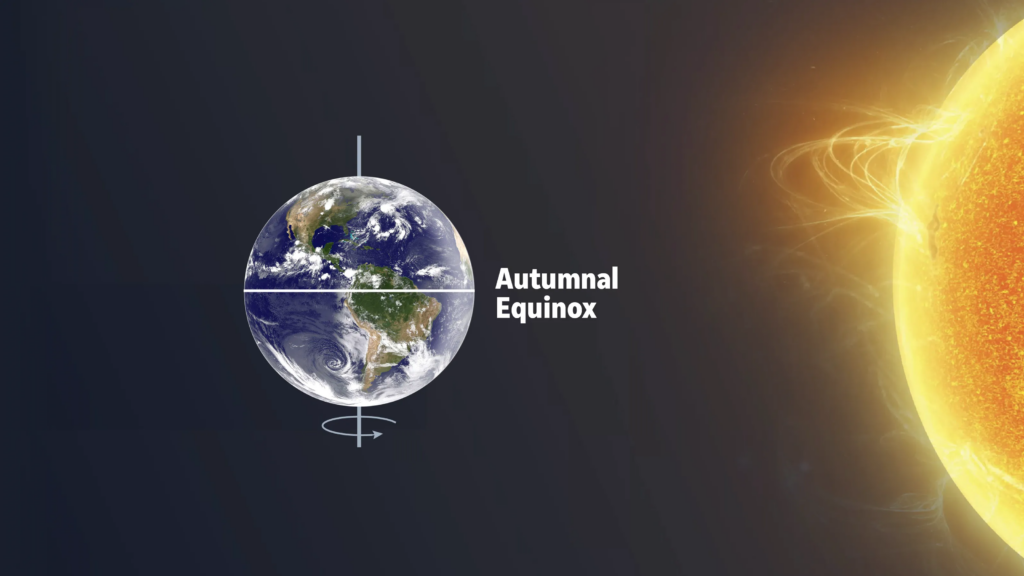
Summer is coming to an end, and the first day of fall arrives on Tuesday, September 22, with the autumnal equinox. This is the time of year when day and night are roughly equal in length, giving us close to 12 hours of daylight and 12 hours of darkness.
🌙 Evening Sky: Venus, Mercury & Saturn
✨ Venus: Catch It While You Can
Venus is nearing the end of its evening appearance, so this is a good time to try catching it before it disappears into the twilight. It sits very low in the western sky, which can make it challenging to spot if you have trees, buildings, or hills blocking your view. However, Venus reaches its greatest brightness this week, making it a brilliant sight if you have a clear horizon.
Look toward the west shortly after sunset and try to find a location with an unobstructed view.
☄️ Mercury: A Quick Appearance
If you’re quick, you may be able to catch Mercury about 25 minutes after sunset. It appears below Venus and will be close to the horizon.
Mercury can be difficult to see because of its low position and the lingering twilight. Binoculars may help you locate it, but be sure to put them away before the Sun sets if you are scanning near the horizon. Never point binoculars or a telescope toward the Sun.
🪐 Saturn: The Evening Highlight
The real evening star this week, however, is Saturn!
The ringed planet rises at approximately 7:30 PM and remains visible for most of the night. It is bright enough to stand out from the surrounding stars, making it one of the easier planets to identify.
Saturn is also approaching its October opposition, when Earth will be positioned between the Sun and Saturn, giving us favorable viewing conditions. Its rings are gradually opening again after appearing nearly edge-on in 2025. By September 2026, they are noticeably more open, although they are still far from their widest appearance.
If you have a small telescope, Saturn is definitely worth a look. Even a modest backyard telescope can reveal its famous rings, and with good viewing conditions, you may also be able to spot Titan, Saturn’s largest moon.
It is one of those sights that can make you appreciate just how amazing our solar system really is!
🌅 Morning Sky: Mars & Jupiter
If you’re willing to set the alarm a little earlier, the morning sky has some great sights of its own!
🔴 Mars: A Rusty Red Planet
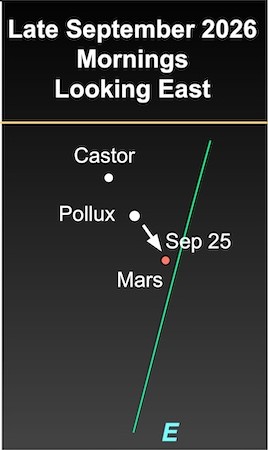
Mars rises around 1–2 AM in September and can be found in the constellation Gemini. It will pass south of the star Pollux, giving skywatchers a chance to compare two different-looking objects.
Mars appears reddish-orange, while Pollux shines with a more yellowish-orange hue. The contrast makes them interesting to observe together.
That rusty color isn’t just your imagination. Mars gets its reddish appearance from iron minerals in its surface material that have oxidized—essentially, they have rusted—over billions of years.
Mars will gradually become brighter as Earth and Mars move closer together in their respective orbits. Keep watching it over the coming months as its appearance changes.
🟠 Jupiter: The Brightest Morning Planet
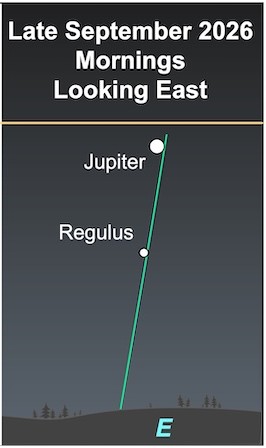
Jupiter rises around an hour before sunrise and will be brighter than any other star in the sky.
Look toward the eastern sky in the early morning hours. Jupiter’s brightness makes it relatively easy to identify, even if you aren’t familiar with many constellations.
If you have binoculars or a telescope, Jupiter is especially rewarding. You may even be able to spot some of its four largest moons, known as the Galilean moons:
Io
Europa
Ganymede
Callisto
These moons were observed by Galileo Galilei in 1610. Depending on the viewing conditions and your equipment, you may see them as tiny points of light lined up near Jupiter.
✨ Constellation of the Week: Lyra the Lyre
Look overhead this week, and you may notice a bright star that stands out among the surrounding stars. That is Vega, the brightest star in the constellation Lyra, which represents a lyre, a stringed musical instrument.
Lyra is one of the three constellations that make up the Summer Triangle, along with Cygnus the Swan and Aquila the Eagle.
⭐ Meet Vega
Vega is one of the brightest stars in the night sky and is a prominent star in the northern celestial hemisphere. Although Sirius is the brightest star in the night sky overall, Vega is an excellent star to learn because it is so easy to locate during summer and early fall.
Vega is part of the Summer Triangle along with:
Deneb — The bright star in Cygnus the Swan.
Altair — The bright star in Aquila the Eagle.
Vega — The brightest star in Lyra the Lyre.
Together, these three stars form a large triangle high in the evening sky.
🎶 The Story Behind Lyra
In Greek mythology, Lyra represents the musical instrument of Orpheus, a legendary musician whose music was said to be so beautiful that it could charm people, animals, and even the gods.
The lyre was traditionally made using a tortoise shell, with strings stretched across a wooden frame. The constellation honors the instrument and the story of Orpheus.
When you’re outside this week, try finding Vega first. Once you locate it, look for the surrounding stars that form Lyra. You don’t need a telescope to enjoy this constellation—just a reasonably dark sky and a little patience.
🌠 Until Next Week…
The first day of fall is a reminder that the seasons are always changing, both here on Earth and in the night sky. Venus is making its last evening appearance, Saturn is becoming a great target for telescope viewing, and the morning sky offers Mars and Jupiter for those willing to get up early.
So, whether you spend five minutes looking up from your backyard or set aside an entire evening for stargazing, take a little time to enjoy the sky above us.