
Night sky this week through May 15th, 2026, spring is definitely starting to make itself known. The evenings are getting longer, there’s still a bit of chill hanging in the air, and the stars are slowly shifting into their new seasonal lineup. It’s that in-between time where winter hasn’t quite let go, but spring is clearly taking over. It’s the perfect excuse to step outside for a few minutes and just look up.
🌙 Evening Highlights
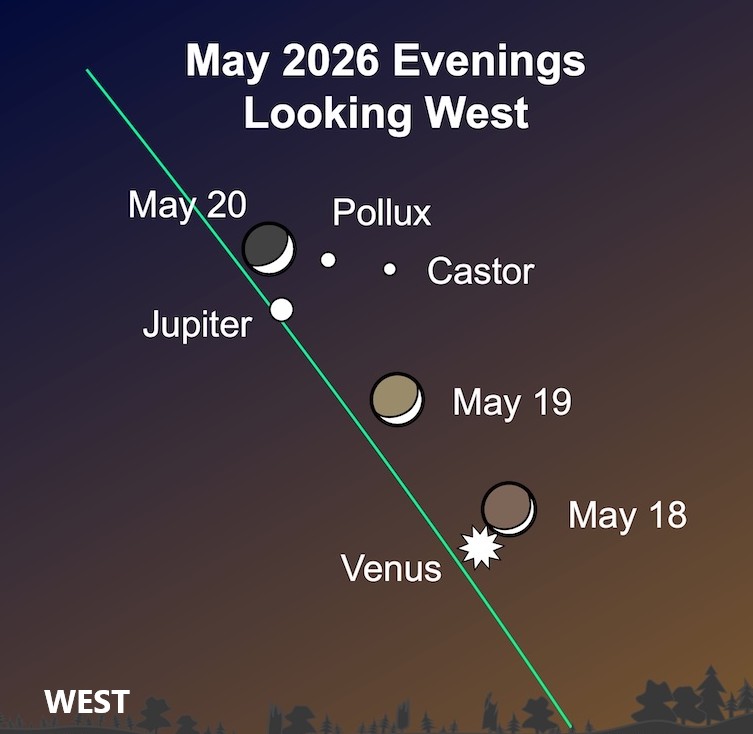
Right after sunset, Venus is putting on a great show. It’s brilliant and hard to miss, often popping into view before the rest of the stars. Look toward the west-northwest, and it’ll be one of the first things you see. Just below it sits the reddish star Aldebaran, marking the eye of Taurus the Bull.
Higher up in the western sky, Jupiter shines bright and steady. It’s easy to spot and stick around for most of the evening before setting after midnight. If you’ve got binoculars, take a quick look, you might even catch its four largest moons lined up like tiny points of light. Over the next several weeks, Jupiter and Venus will appear to drift closer together, which is always fun to watch night by night.
🌅 Early Morning Highlights
If you’re up early or just getting in late, there’s still plenty to see before sunrise.
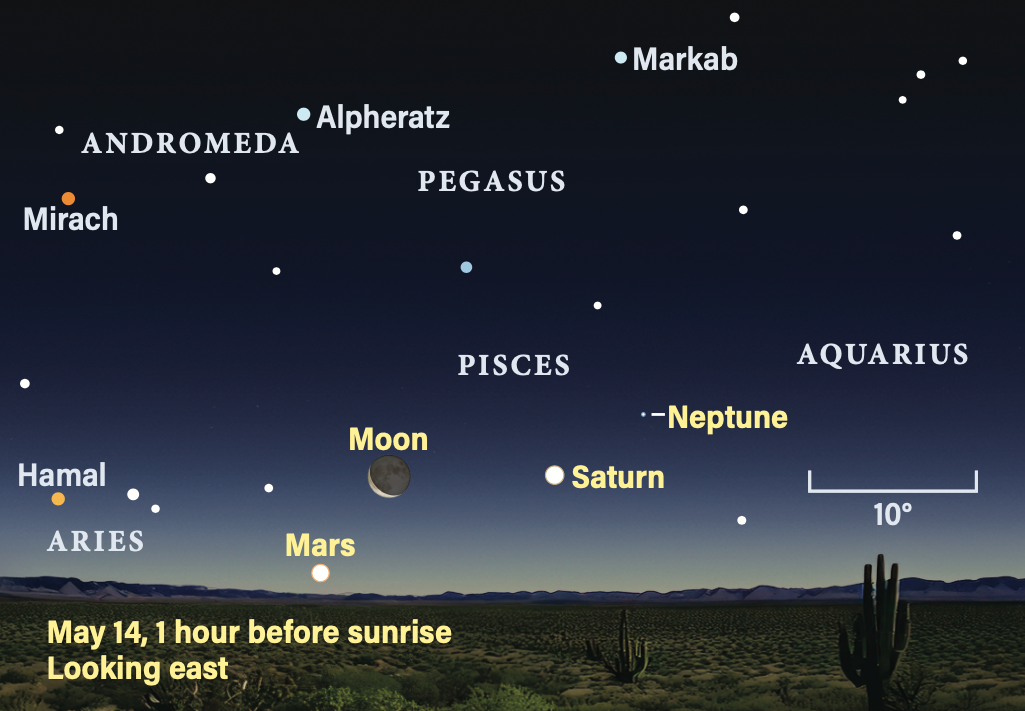
Saturn rises about 45 minutes before the Sun in the eastern sky. It’s still pretty low, so you’ll need a clear horizon to spot it.
In the night sky this week, Mars sits a little lower and to the left, making it a bit trickier to pick out for now, but it’ll get easier as we move deeper into May. On Thursday morning, the thin crescent Moon will sit between Mars and Saturn, making for a really nice grouping in the dawn sky.
✨ Constellations
This is where the seasonal shift really starts to stand out.
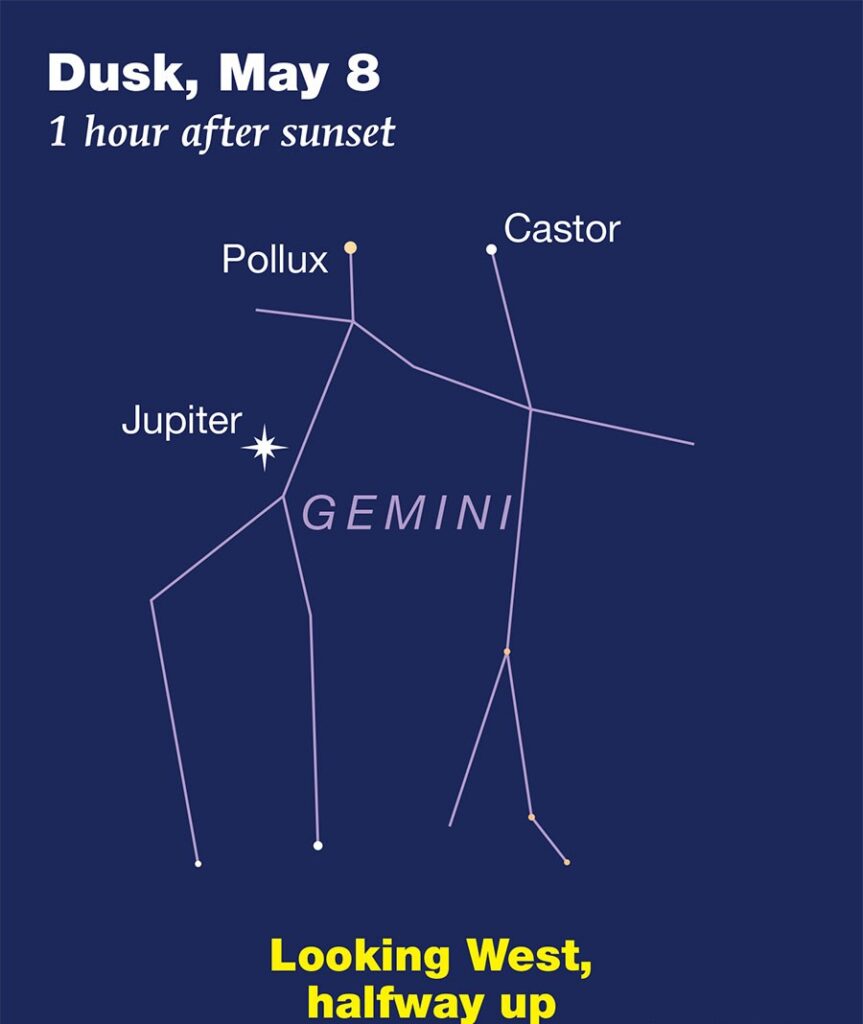
When you find Jupiter, notice the two bright stars nearby. The bright yellow-orange star is Pollux, a red giant only about 34 light-years away. The other bright white star is Castor, which is actually a multiple-star system located around 51 light-years from Earth.
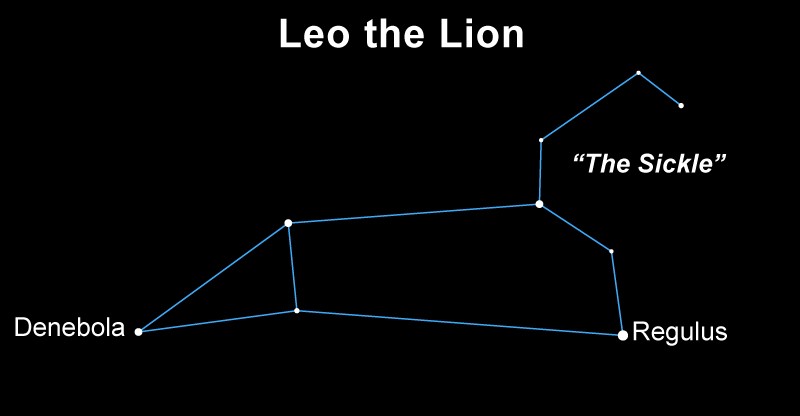
Around 10 PM, look overhead, and you’ll spot Leo the Lion. It’s easy to recognize once you know what to look for—a backward question mark shape called the “Sickle,” with a triangle of stars trailing behind it. The brightest star here is Regulus, sitting right at the base of that question mark.
There’s some interesting history tied to Leo, too. In ancient Egypt, when the Sun moved into Leo, it lined up with the annual flooding of the Nile, bringing life-giving water to the region. That’s part of why lion imagery showed up so often in fountains built by the Greeks and Romans.
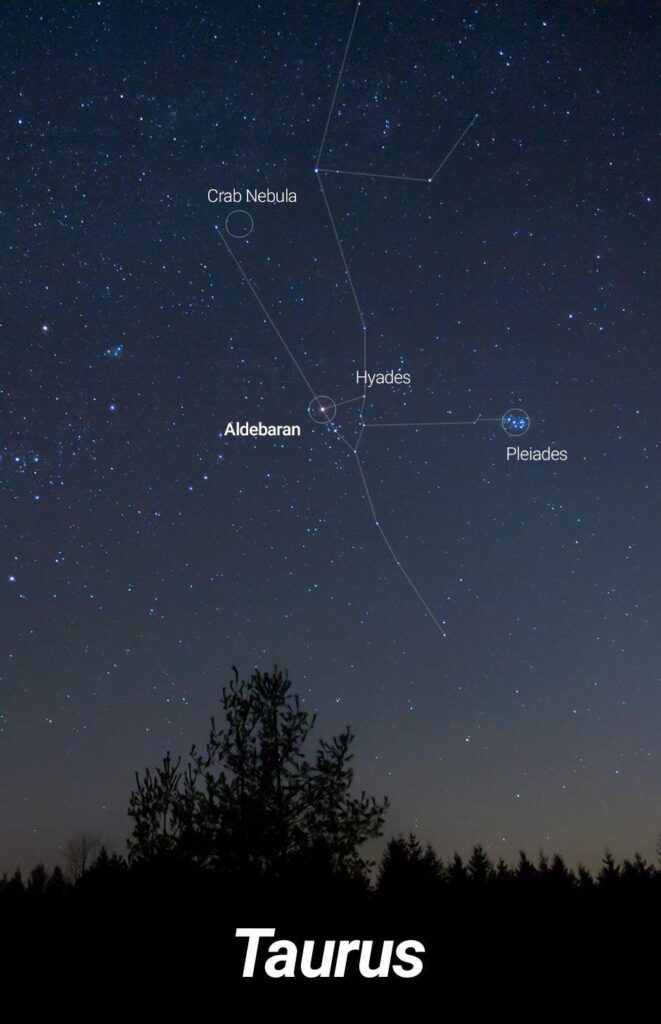
Off to the west, Taurus the Bull is starting to dip lower each night. You can still pick out its V-shaped face, with Aldebaran glowing orange as the eye. It won’t be around much longer in the evening sky, so now’s a good time to take one last look before it fades into the sunset over the coming weeks.
Meanwhile, as Orion the Hunter slips away in the west, Scorpius the Scorpion begins rising in the southeast.
If you get a clear night, even just a few minutes outside can be worth it. This is one of those times of year when the sky feels like it’s in transition and you can actually watch it happen night by night.