
Fall nights are getting longer, making this a great time to spend a few minutes outside looking up in the night sky this week. This week brings Saturn at opposition, close encounters between the Moon and Mars and Jupiter, and the Draconid meteor shower.
🪐 Saturn Takes Center Stage in the Night Sky this Week
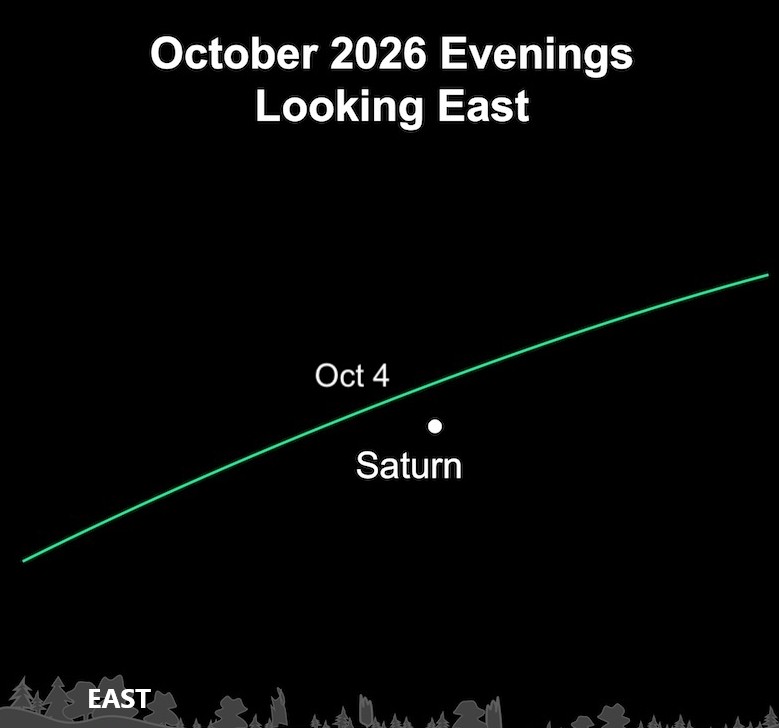
Saturn reaches opposition Sunday, October 4. From South Dakota, Saturn rises at about 6:40 p.m. and remains visible all night, reaching its highest point around 1 a.m. Look toward the east after sunset and watch Saturn move across the southern sky during the night.
Opposition occurs when Earth passes between the Sun and Saturn, making Saturn especially bright and well positioned for viewing. A small telescope will reveal its beautiful rings.
🌅 Early Morning: Moon, Mars & Jupiter
Early risers have two bright planets to find.
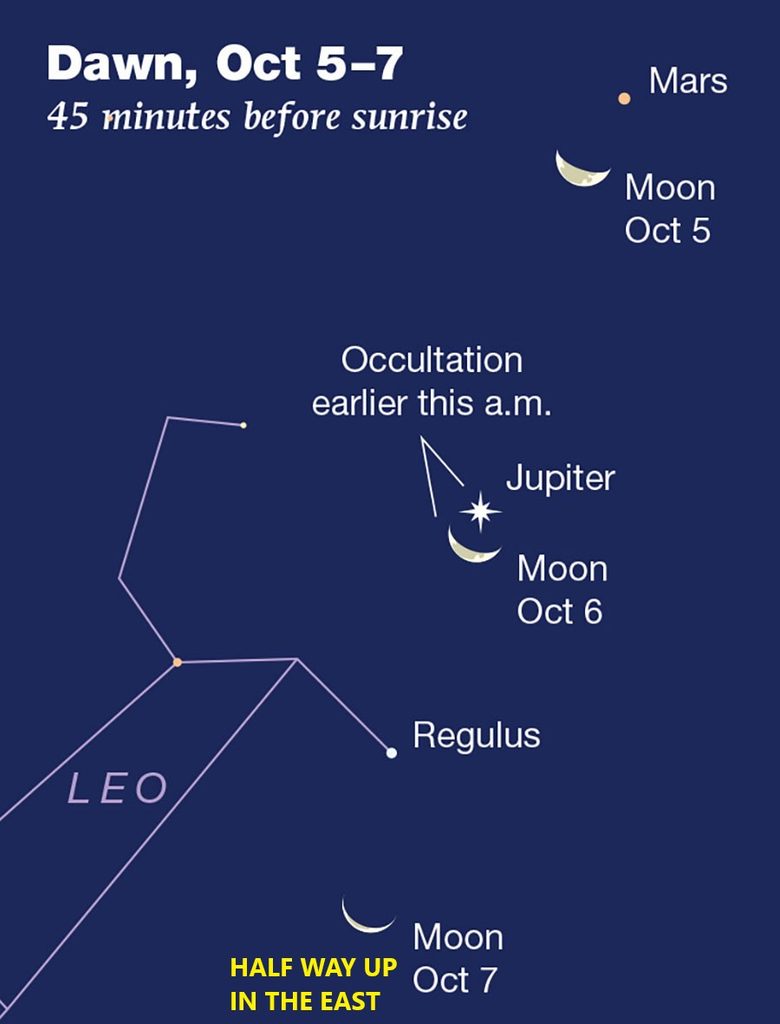
Mars rises around 1:10 a.m. this week. Look toward the east-northeast before sunrise for its faint reddish-orange glow. On Monday morning, October 5, the Moon passes very close to Mars. The pair will be easiest to see after about 2 a.m., with the Moon appearing below or to the left of Mars. For most of the United States, you will see both the Moon and reddish Mars close together in the eastern sky, rather than Mars disappearing behind the Moon.
Jupiter rises around 2:45–3 a.m. and is much brighter than Mars. On Tuesday morning, October 6, the Moon will pass very close to Jupiter. The exact view of the Moon passing in front of Jupiter depends on your location.
🌠 Draconid Meteor Shower in the Night Sky this Week
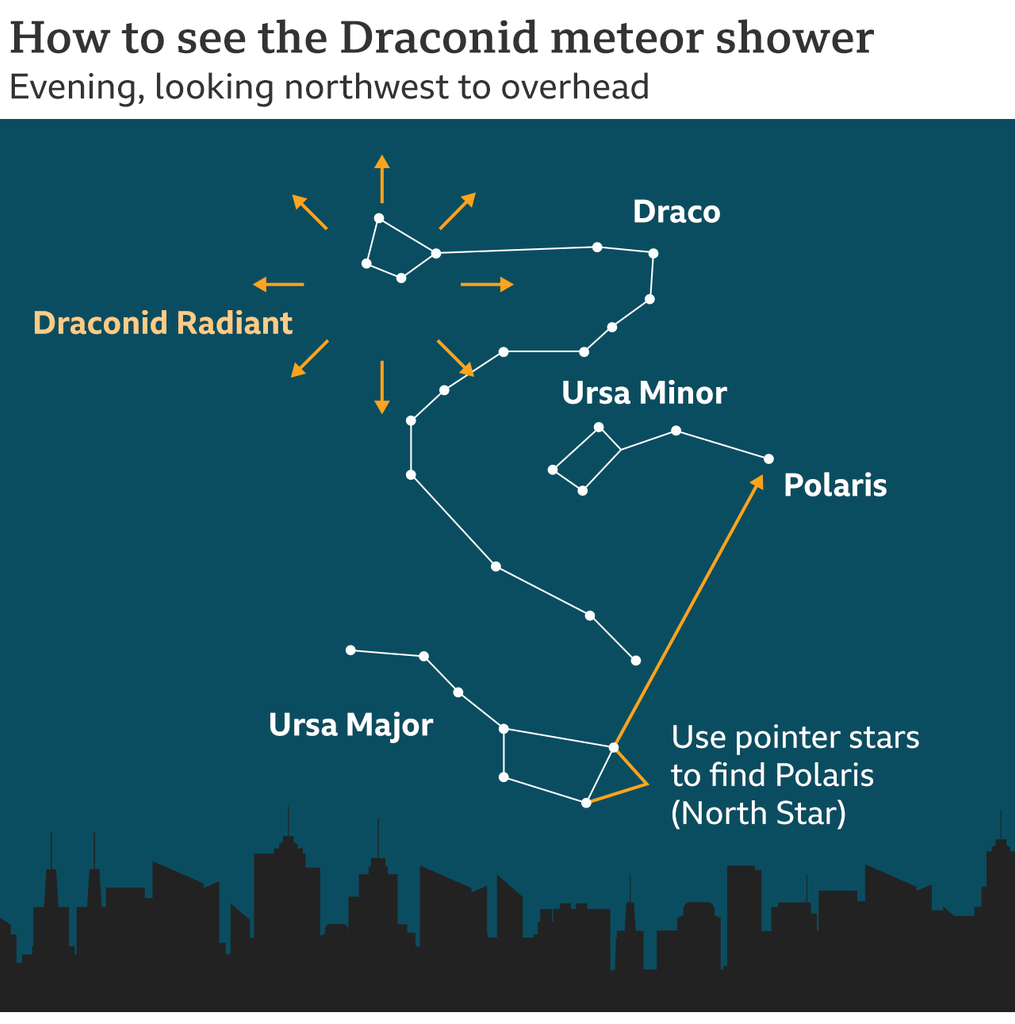
The Draconid meteor shower peaks the night of October 8–9. Unlike many meteor showers, the Draconids are best watched during the evening rather than the early morning.
From Winner, SD, start looking after about 8 p.m., with the best opportunity continuing through the evening. Look generally toward the north and northwest, but meteors can streak across any part of the sky.
This year’s nearly moonless sky should provide good conditions for spotting the fainter meteors.
🌟 Don’t Forget the Stars
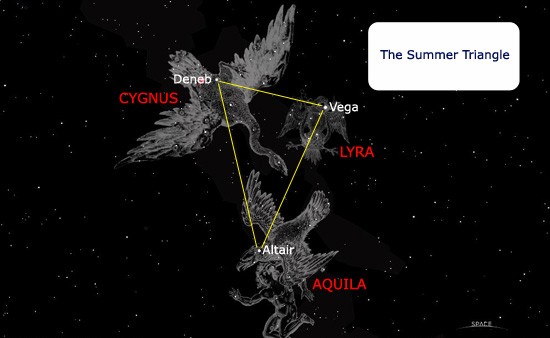
Look overhead for Vega, one of the brightest stars in the night sky. Vega is part of the Summer Triangle, along with Deneb and Altair. Even though summer is officially over, the Summer Triangle remains easy to find on October evenings.
So, grab a lawn chair, maybe a jacket, and spend a few minutes outside this week. Saturn, Mars, Jupiter, and a few shooting stars are waiting! 🌌