
Fall nights are getting longer here in South Dakota, giving us more time to enjoy the night sky this week. You don’t need a telescope or fancy equipment to get started. Just grab a lawn chair, put on a warm jacket, and head outside for a little stargazing!
This week, Saturn is shining in the evening sky, Mars and Jupiter are morning favorites, and the Orionid meteor shower is putting on its annual show. So, if you don’t mind getting up early—or staying up late—there’s plenty to look for!
🌠 Night sky this week: watch the Orionid Meteor Shower
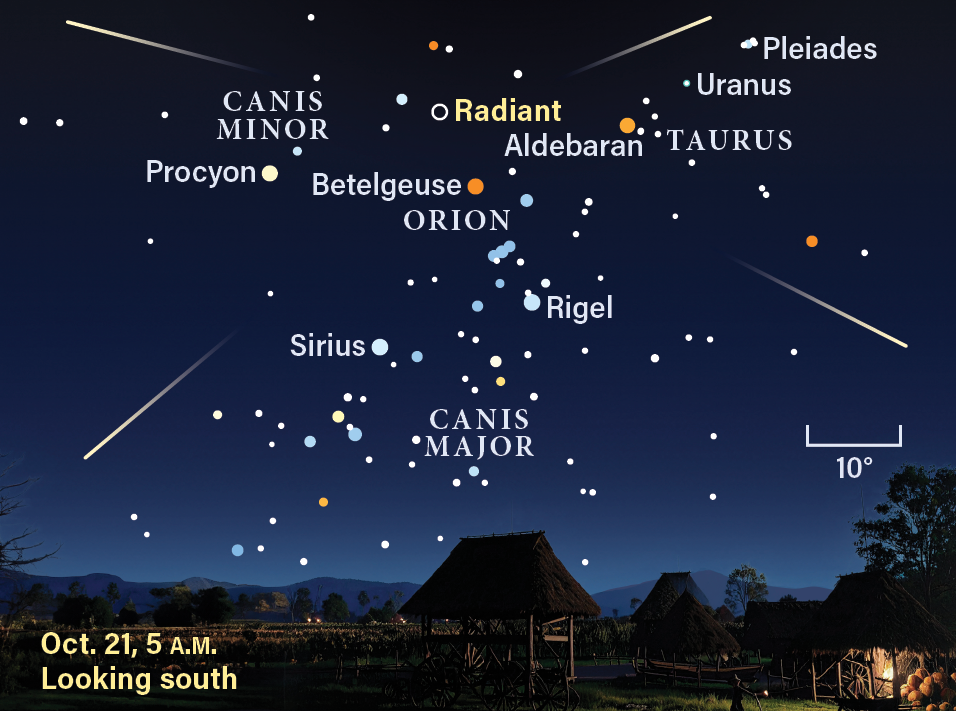
The Orionid meteor shower peaks overnight on October 21–22, giving us a chance to see shooting stars streak across the sky. These meteors are bits of debris left behind by Halley’s Comet as Earth passes through its old trail.
Under ideal dark-sky conditions, the Orionids can produce around 15 to 20 meteors per hour, although you may see fewer from town or under a bright sky. The meteors travel quickly and sometimes leave glowing trails behind them.
The best time to watch is after midnight and before dawn, especially once the Moon sets and the sky gets darker. Look toward the eastern sky as Orion rises, but don’t stare at just one spot. Meteors can appear anywhere overhead, and looking a little away from Orion may help you catch longer, more impressive streaks.
Find a spot away from streetlights, bundle up, and give your eyes about 20 to 30 minutes to adjust to the darkness. No binoculars or telescope are needed. A comfortable chair and a warm blanket are all the equipment you really need!
🪐 Saturn Shines in the Night Sky
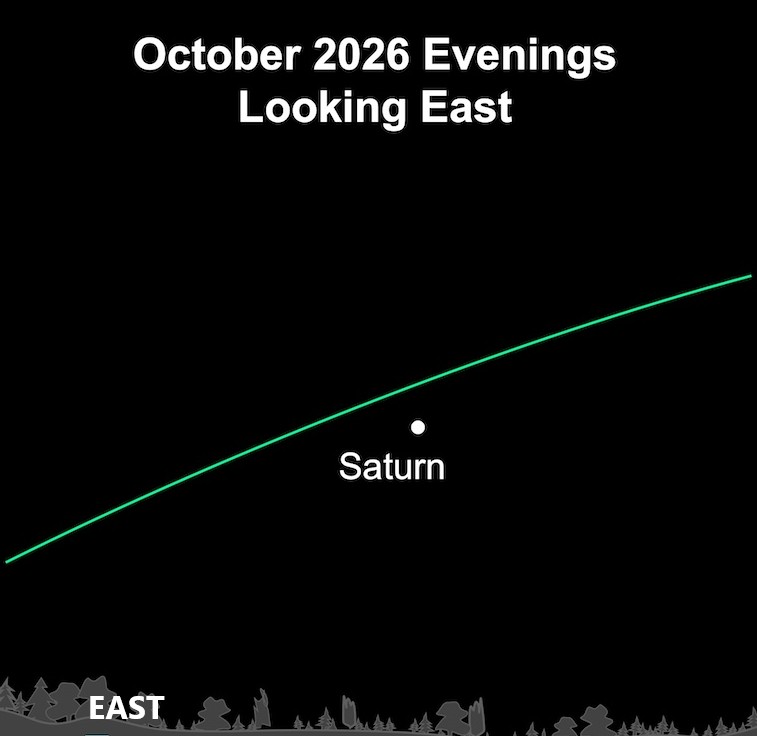
Saturn is a wonderful planet to look for on October evenings. It rises in the east around sunset and remains visible for much of the night. Around midnight, look toward the southern sky, where Saturn climbs high enough to make a good target for observing.
Saturn has a soft, golden appearance and is easy to recognize once you know where to look. If you have a telescope, this is a great time to take a closer look at the planet and its famous rings.
Saturn is currently in the constellation Cetus, also known as the Whale. Although Cetus is sometimes associated with the zodiac in discussions of astronomy, it is not one of the traditional 12 zodiac signs used in astrology.
Even without a telescope, Saturn is worth finding on a clear fall evening. It’s fun to look up at that little golden point of light and remember that you’re seeing a giant planet millions of miles away!
🌅 Early Morning: Look for Mars and Jupiter
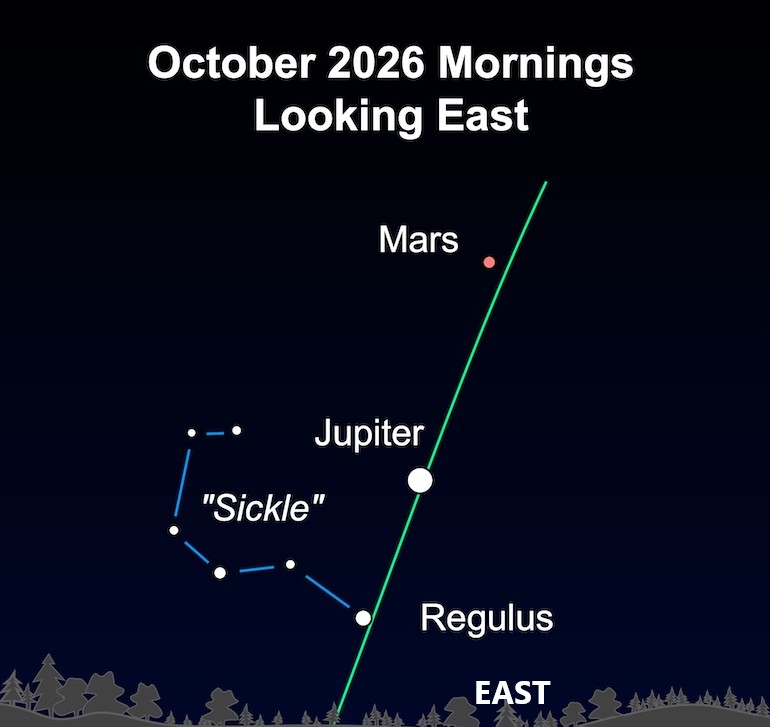
If you’re an early riser—or happen to be awake before sunrise, keep an eye on the eastern sky for Mars and Jupiter.
Mars has a reddish-orange color that can help you recognize it among the stars. It rises around midnight this week and climbs higher as the hours pass. Mars may not be as bright as Jupiter, but its rusty color makes it interesting to spot.
You can also look for the Beehive Cluster in the constellation Cancer. This beautiful gathering of stars contains hundreds of members, with roughly 1,000 stars estimated to be associated with the cluster. Binoculars are helpful for seeing more of its stars. Mars has been passing near this cluster earlier in October, so the distance between them changes as the month goes on.
Jupiter is another morning-sky favorite. Look toward the eastern sky before sunrise for this bright planet. It stands out against the darker sky and is usually one of the easiest planets to recognize without any equipment.
If you’re already outside looking for meteors before dawn, take a few extra minutes to find Jupiter and Mars, too. Just be sure to head back inside before your coffee gets cold!
🌟 The Summer Triangle Is Still Hanging Around

Summer may be over, but one of its best-known star patterns is still visible on fall evenings. Look overhead and toward the western half of the sky for the Summer Triangle, formed by three bright stars: Vega, Deneb, and Altair.
Vega is especially easy to find because it is one of the brightest stars in the night sky. Once you spot it, look for Deneb and Altair to complete the large triangle. The shape is not a perfect equilateral triangle, but it is a handy pattern for getting familiar with the stars.
The Summer Triangle will gradually move toward the western horizon as the season progresses, making room for more of the winter constellations later in the evening.
Another star worth looking for is Fomalhaut, a bright star low in the southern sky. It belongs to the constellation Piscis Austrinus, often called the Southern Fish. Although the full constellation can be difficult to pick out from our northern latitude, Fomalhaut itself is bright enough to see on a clear night with an unobstructed view of the southern horizon.
🍂 A Little Fall Stargazing in South Dakota
October is a wonderful month to spend a little time under the stars. Here in South Dakota, the evenings can get chilly in a hurry, so dress warmly and find a comfortable spot away from bright lights.
You don’t have to identify every constellation or know the names of all the planets to enjoy the view. Start with one bright planet, watch for a shooting star, or simply take a few minutes to enjoy the stars above the prairie.
So grab that lawn chair, bring along a warm blanket, and look up! Whether you’re watching Saturn in the evening, searching for Orionid meteors before dawn, or spotting Jupiter in the morning sky, there’s always something interesting happening above us. 🌌✨
1 comment for “Night Sky This Week: Through October 23, 2026”