
Summer is in full swing, and so is the night sky this week! This is one of my favorite times of year to spend a few quiet minutes outside after sunset. If you can battle the mosquitoes for a little while, grab a lawn chair, lean back, and enjoy the show. Plenty is happening overhead this week.
🌙 Evening Highlights
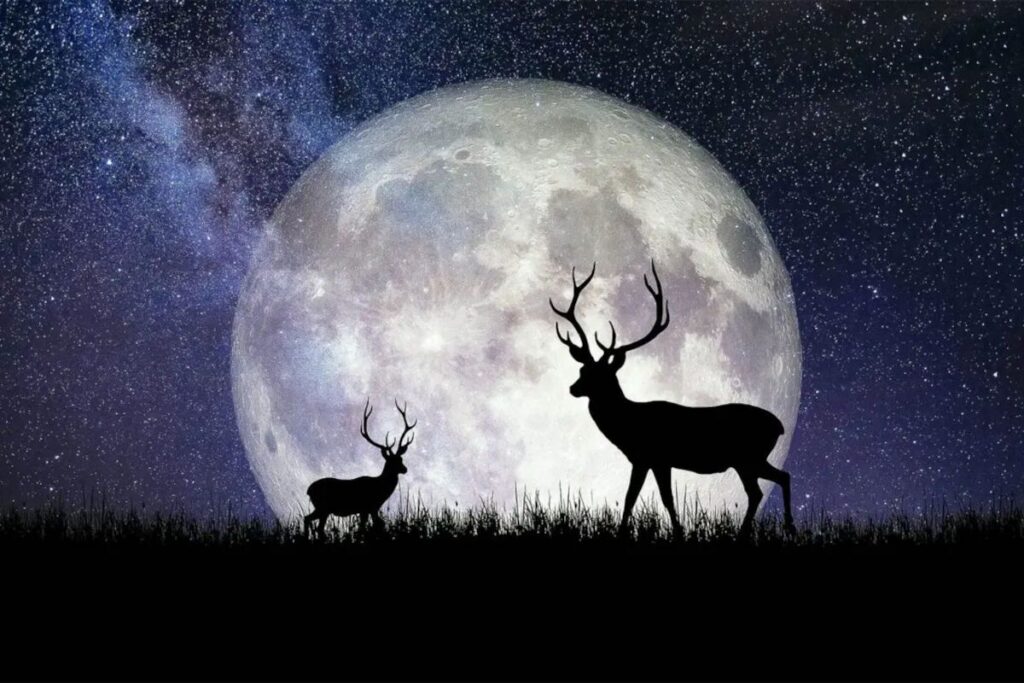
Friday brings the Full Buck Moon, named for the time of year when bucks begin growing their new antlers. Watch for the moon to rise about 20 minutes after sunset—it’s always a beautiful sight as it climbs above the horizon.
Venus is still the star of the evening sky. It’s so bright that it’s often the first “star” you’ll notice as twilight fades. Just look toward the western horizon after sunset, and you really can’t miss it. Planets shine with a steady light, while stars twinkle. This week, compare steady Venus or Saturn with the twinkling stars nearby, and you’ll immediately notice the difference.
🌅 Early Morning Sky
If you’re willing to get up before sunrise, the morning sky has a lot to offer this week.
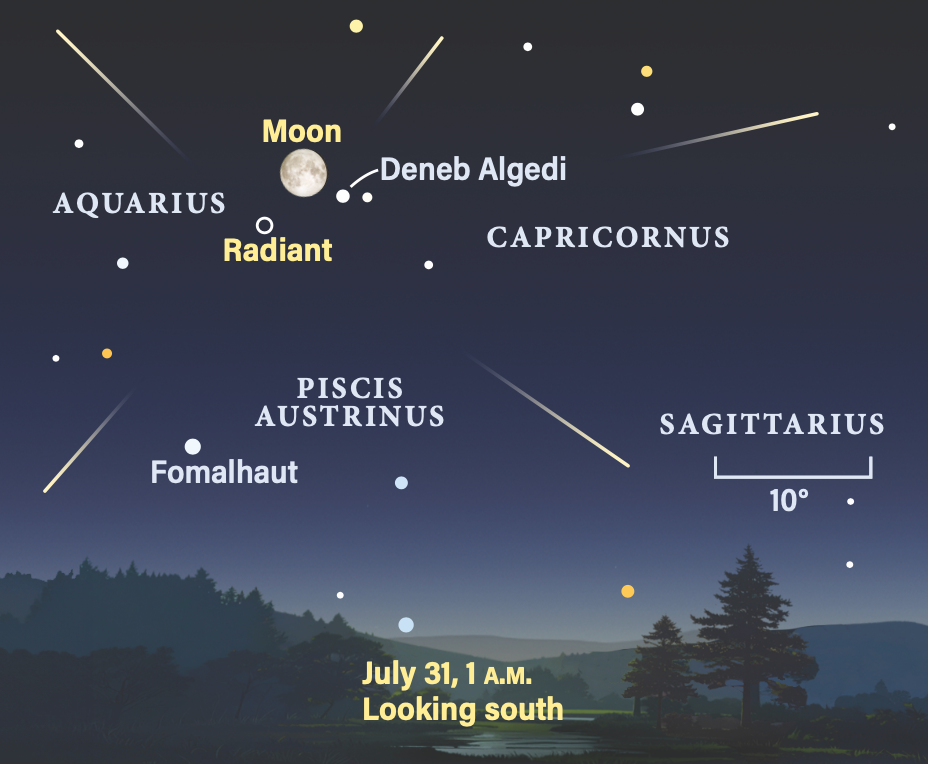
Thursday and Friday feature the peaks of two meteor showers, the Alpha Capricornids and the Southern Delta Aquariids. The bright moon will wash out many of the fainter meteors, but you should still catch around 5 to 25 brighter meteors per hour, especially after midnight.
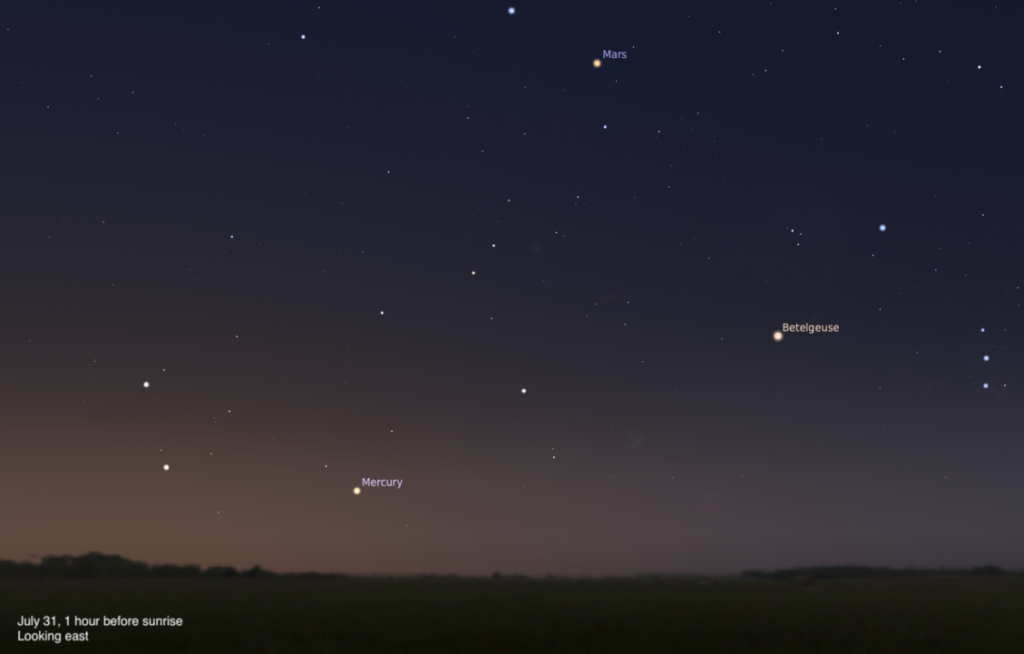
Mercury is making a brief appearance low in the eastern sky about an hour before sunrise. It will brighten as the week goes on, but because it stays close to the horizon, a pair of binoculars will make it much easier to spot.
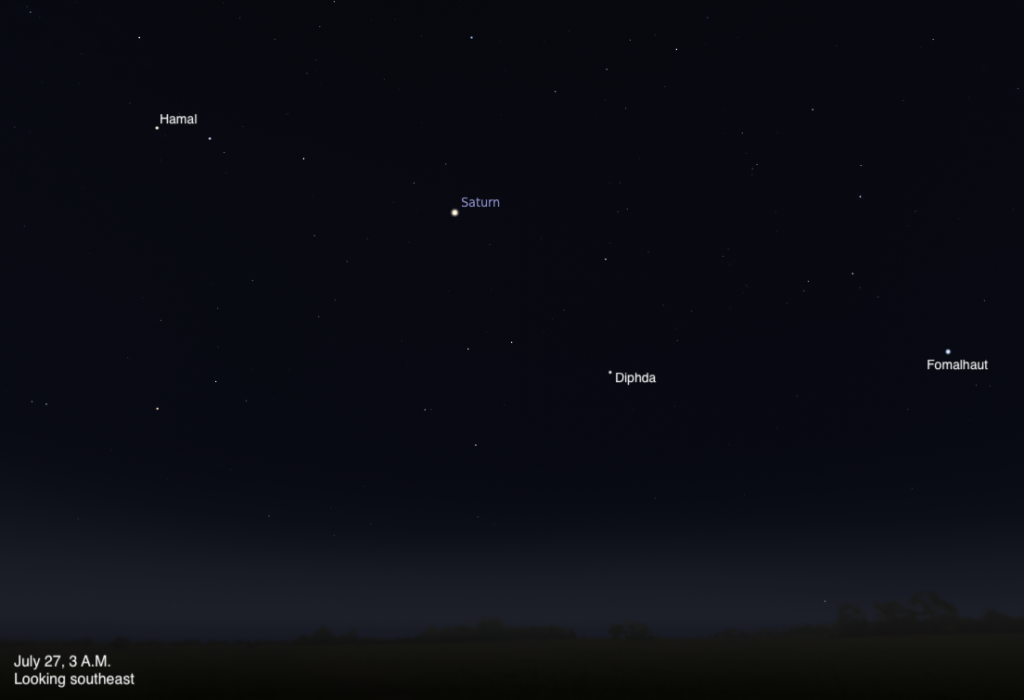
Saturn rises around midnight and shines with a steady golden glow that doesn’t twinkle like the surrounding stars. If you have a small telescope, you’re in for a treat. Its famous rings are becoming more favorably tilted toward Earth, making the coming months an excellent time to enjoy views of the ringed planet.
Look to the upper right of Mercury to find Mars. It isn’t nearly as bright as it was earlier this year and will gradually fade as dawn approaches.
A little higher and to the left of Mars is Aldebaran, the bright orange eye of Taurus the Bull. Its warm orange color creates a beautiful contrast with Mars’ reddish glow.
Between Aldebaran and the Pleiades star cluster lies the distant planet Uranus. It’s much fainter than the other planets, so binoculars are recommended if you’d like to spot its subtle greenish tint.
✨ Constellations of the Week
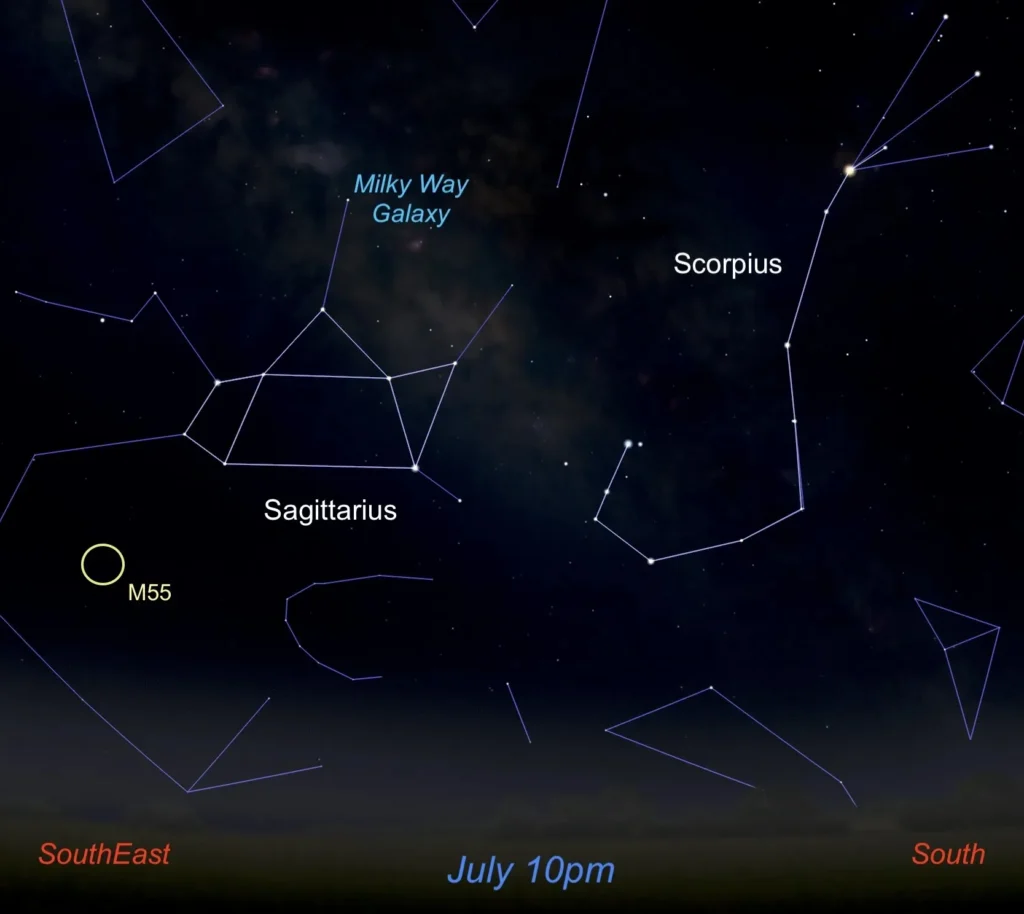
One of the sure signs of summer is Scorpius climbing into the southeastern sky. This impressive constellation really does resemble a giant scorpion, complete with curved claws and a long sweeping tail.
Its brightest star, Antares, glows with a rich reddish-orange color. The name Antares means “rival of Mars” because ancient skywatchers often confused the two due to their similar colors.
According to Greek mythology, Scorpius was the giant scorpion sent to defeat the mighty hunter Orion. To keep them apart forever, Zeus placed them on opposite sides of the sky. As Scorpius rises on warm summer evenings, Orion is already below the horizon.
Just east of Scorpius is Sagittarius, the Archer. While mythology pictures a centaur with a bow, most of us recognize it as the famous Teapot. Once you find the Teapot, you’ve located one of the richest areas of the night sky this week.
The “steam” rising from the Teapot points directly toward the brightest part of the Milky Way. As darkness falls, our galaxy stretches across the sky like a soft river of light. If you’re away from city lights, it’s one of the most breathtaking sights of summer.
That hazy band isn’t a cloud at all, it’s the combined light of billions of distant stars in our own galaxy. When we look toward Sagittarius, we’re looking toward the center of the Milky Way, about 26,000 light-years away. Hidden there are glowing nebulae, ancient star clusters, and countless objects waiting to be explored with binoculars or a telescope.
If you have a clear evening this week, take a few minutes to step outside and look up. Whether it’s brilliant Venus shining after sunset, Saturn rising around midnight, a meteor streaking across the sky, or the Milky Way arching overhead, summer nights have a special way of reminding us just how amazing our universe really is.
3 comments for “🌌 Night Sky This Week: Through July 31, 2026”