
Night sky this week through October 2, 2026: all is officially here, and the night sky is changing right along with the seasons. This week brings a beautiful Harvest Moon, bright planets, and some familiar fall constellations. Grab a lawn chair and look up!
🌕 The Harvest Moon
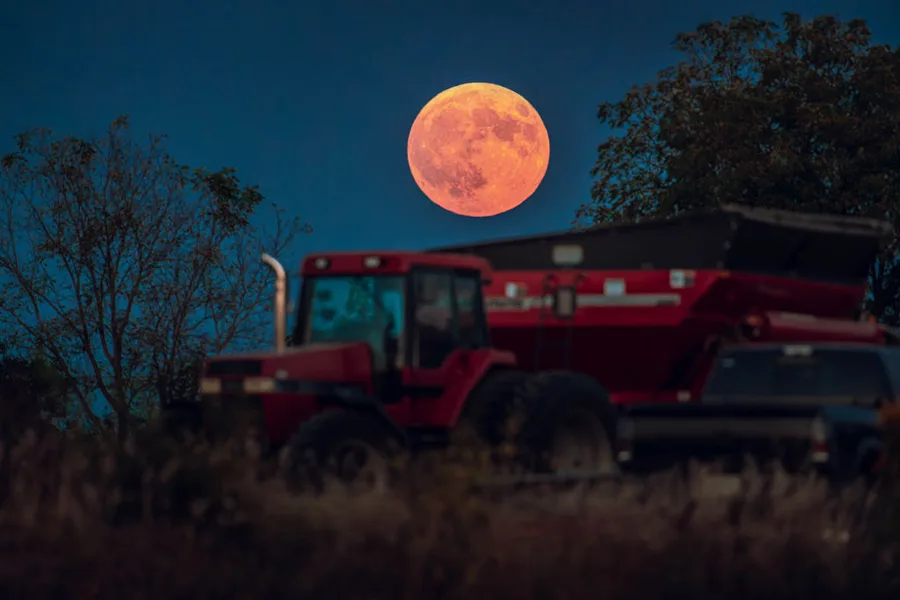
The Full Harvest Moon arrives Saturday, September 26. The Harvest Moon is the full Moon closest to the autumnal equinox, which occurred September 22 this year.
So why is it called the Harvest Moon? Around the time of the fall equinox, the Moon rises only a little later from one evening to the next. Instead of the usual roughly 50-minute difference, the interval can be closer to 25–30 minutes in much of the Northern Hemisphere. That meant farmers traditionally had several evenings of extra moonlight to continue harvesting crops after sunset—before electric lights were available.
🪐 Night Sky: Venus, Mercury, & Saturn
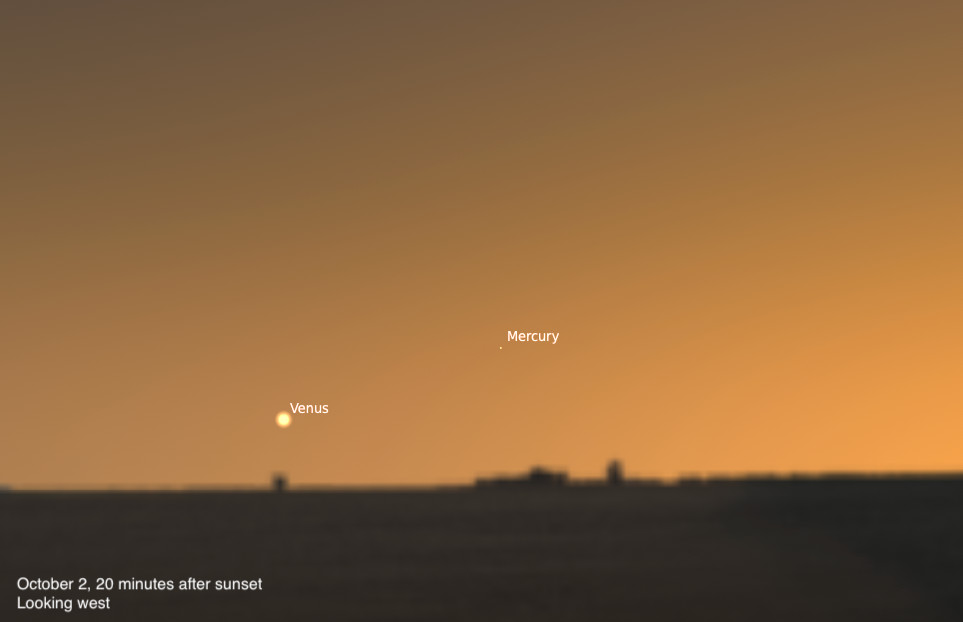
Venus still shines brightly low in the western sky just after sunset, though it is becoming increasingly difficult to see as it moves closer to the Sun. Find a location with a clear western horizon.
When you look at bright Venus, look to the right to catch fleeting Mercury.
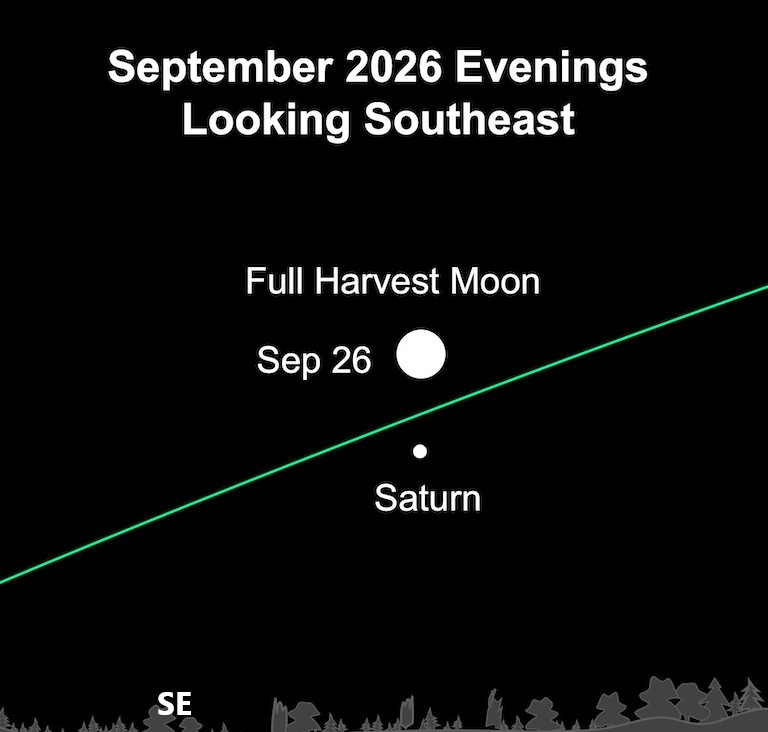
Saturn is the evening highlight. It rises in the east around sunset and remains visible most of the night. Saturn reaches opposition on October 4, just after this week’s time frame, so late September and early October are excellent for viewing it. A small telescope can reveal its famous rings and, with good conditions, its largest moon. The Full Harvest Moon will rise near Saturn, making a particularly nice sight in the eastern sky after sunset on Saturday.
🌅 Morning Sky: Mars & Jupiter
If you’re an early riser, look toward the eastern sky before sunrise.
Mars rises around 1–2 a.m. and has a noticeable reddish-orange color. It will become increasingly interesting over the coming months as it approaches its next opposition in February 2027.
Jupiter rises around 3 a.m. and is much brighter than Mars. With binoculars or a small telescope, you may be able to see its four largest moons—Io, Europa, Ganymede, and Callisto.
✨ Constellation of the Week: Lyra
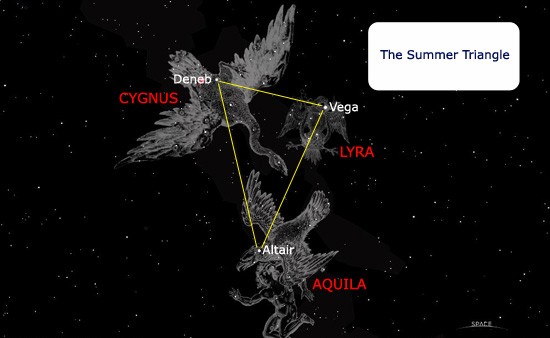
Overhead in the evening sky is Vega, the brightest star in Lyra. Vega is one of the three stars of the Summer Triangle, along with Deneb in Cygnus and Altair in Aquila.
Lyra represents a lyre, the musical instrument associated with Orpheus in Greek mythology. Once you find bright Vega, look for the smaller group of stars surrounding it that forms the constellation.
🌠 Until Next Week in the Night Sky this Week…
Fall nights are getting longer, making this a great time to spend a few minutes outside. Look for the Harvest Moon and Saturn on September 26, catch Venus before it sinks into the twilight, and set the alarm for Mars and Jupiter in the morning.