
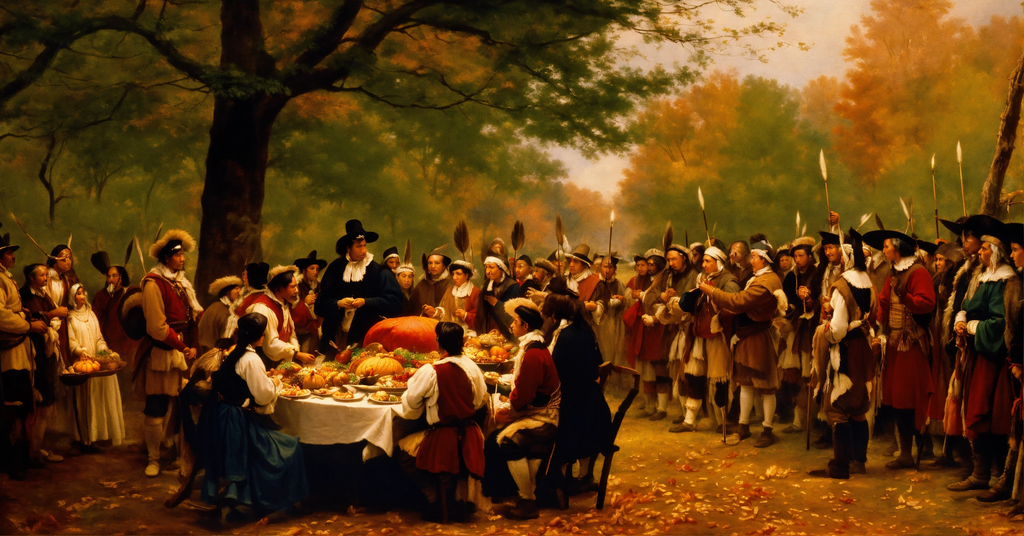
The first Thanksgiving dinner we usually picture a table filled with turkey, mashed potatoes, green bean casserole, sweet potatoes, corn, stuffing, and pumpkin pie. But have you ever wondered what was actually served at the very first Thanksgiving in 1621?
The meal shared by the English colonists at Plymouth and the Wampanoag people was quite different from the Thanksgiving dinners we enjoy today. There were no creamy mashed potatoes, marshmallow-topped sweet potatoes, or green bean casserole. In fact, many of the vegetables we consider Thanksgiving staples today weren’t even part of the menu!
The harvest celebration lasted about three days, and while we don’t have an exact menu, historical accounts give us some clues about the foods that were available and likely served.
What vegetables might have been on the table?
Corn was likely one of the most important foods. Native Americans had been growing corn for generations, and it was an important part of their everyday diet. However, it wasn’t the sweet corn we butter and eat off the cob today. Corn was often dried and ground into meal. It could be boiled into a thick porridge called samp, mixed with beans, or made into a simple bread. Corn was also roasted or boiled when fresh.
Pumpkins and winter squash were familiar foods to the Wampanoag people and colonists. These were important fall crops that could be stored and eaten throughout the winter. Squash could be roasted over a fire, boiled, or cooked in a pot. Pumpkin might have been sliced and cooked until tender. It wasn’t made into the sweet pumpkin pie we serve today.
Beans were another crop grown by Native Americans. They were often planted alongside corn and squash in what is known as the Three Sisters gardening method. Beans could be dried for winter storage and later boiled into soups or stews. They were also sometimes cooked with corn.
Root vegetables, including wild onions and possibly wild roots such as groundnuts, would have been available. These could be boiled, roasted in hot ashes, or added to stews. Groundnuts, which are native North American plants, were an important food source for some Native American communities.
Wild onions, leeks, and garlic were also available. Onions were commonly used to add flavor to meat dishes and stews. In fact, historians believe birds may have been stuffed with chunks of onion and herbs rather than the bread stuffing we make today.
Leafy greens and other garden vegetables such as cabbage, spinach, lettuce, carrots, and turnips were grown by the English colonists. These may have been available for the feast, although we cannot say for certain which ones made it to the table.
Jerusalem artichokes, also called sunchokes, were another native food. Despite their name, they aren’t related to artichokes. They are actually the edible tubers of a sunflower relative. They could be eaten cooked or roasted and were a useful food source in the fall.
Of course, Thanksgiving wouldn’t be Thanksgiving without meat! The 1621 harvest celebration included plenty of meat, but it wasn’t necessarily the turkey-centered dinner we think of today.
Historical accounts tell us that the English colonists and Wampanoag people enjoyed a variety of wild game. The Wampanoag brought five deer to the gathering, making venison (deer meat) one of the best-documented foods served.
Wildfowl was also on the menu. Edward Winslow, one of the colonists, wrote about the abundance of fowl available. These likely included wild ducks, geese, and other waterfowl. Wild turkey was also native to the area and may have been served, although we don’t know for certain.
Other meats and foods that may have been available included:
- Venison: Deer meat brought by the Wampanoag. It could have been roasted over an open fire or cooked in a pot.
- Wild turkey: A native bird that may have been part of the feast, but its presence isn’t confirmed in the surviving accounts.
- Ducks and geese: Wild waterfowl were plentiful in the region and were likely among the birds eaten.
- Other wild birds: The colonists hunted a variety of birds, including waterfowl and other game birds.
- Fish and shellfish: The coastal area provided fish, eels, mussels, clams, and other seafood. These were important foods in the region, although we cannot confirm which, if any, were served at this particular celebration.