
Starting garden seeds indoors is a great way to get a jump on the growing season, especially when it’s still cold outside. It’s also one of the most satisfying parts of gardening. There’s something special about watching those first tiny green sprouts push through the soil, knowing you grew them from scratch. Starting indoors gives your plants extra time to grow strong so they’re ready to thrive once it warms up.
The seed packet will tell you how many weeks to start before transplanting outside. I use May 10 as the last frost date, but you know that can change depending on the year.
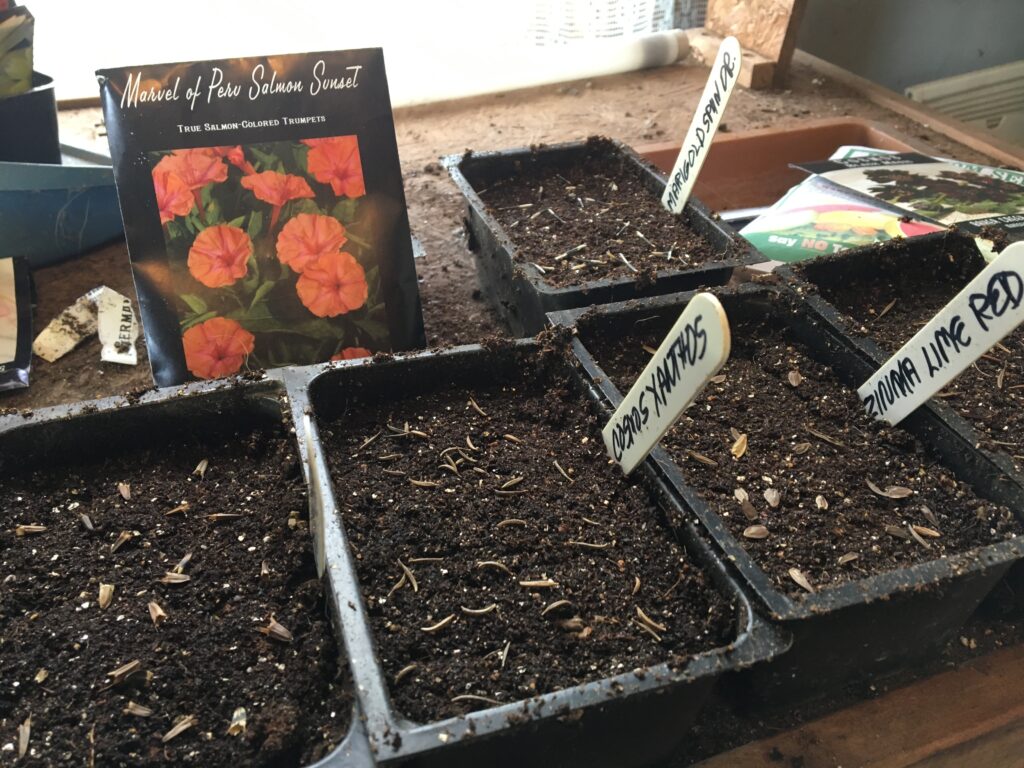
The first thing you’ll need is a container and some seed starting mix. You don’t need anything fancy; seed trays, small pots, or even clean yogurt cups work fine as long as they have drainage holes. Fill the containers with seed starting mix, which is lighter than regular soil and helps roots grow easily. Lightly moisten the soil before planting so it feels damp, not soaking wet.
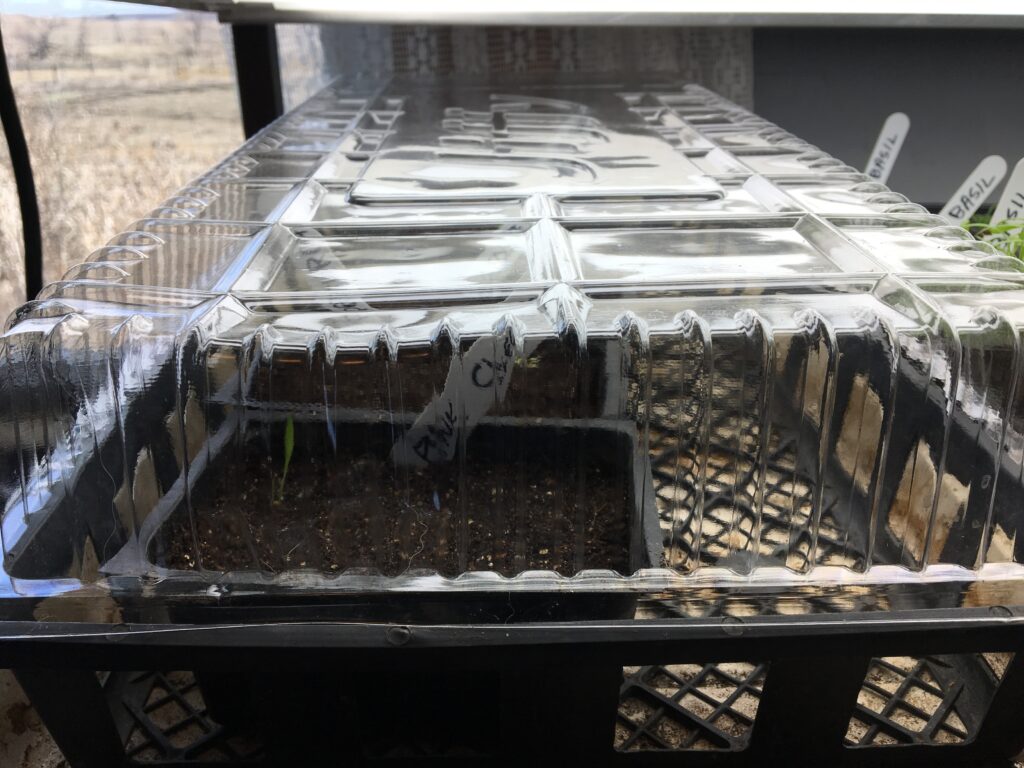
Next, plant your seeds following the depth instructions on the packet. Bigger seeds go a little deeper, while tiny seeds can just be pressed gently into the surface. After planting, water carefully so you don’t disturb them. Some people like to cover the containers with plastic wrap or a clear lid to help keep moisture in, and that can speed up germination. I use a plastic heat mat to promote germination.
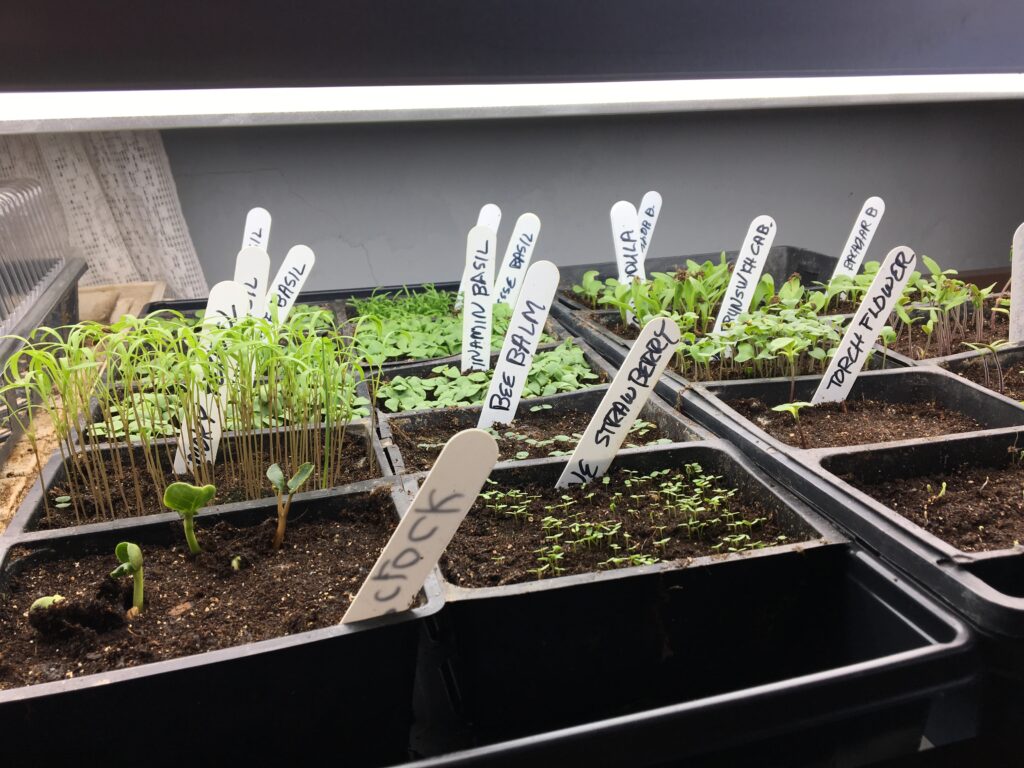
Once the seedlings pop up, they’ll need plenty of light. A bright window can work, but grow lights help prevent seedlings from getting tall and weak. Keep the light close to the plants and check the soil regularly. Seedlings don’t like to dry out, but they also don’t want to sit in soggy soil, so aim for evenly moist.
As my plants grow, they may need to be moved into larger containers, so their roots have room to expand. This is called transplanting, and it helps keep them healthy and grow strong. It’s a simple step that makes a big difference later. Transplant before they get too big and their roots intertwine.
Starting seeds indoors doesn’t require expensive equipment, just a little time, attention, and patience. It’s a great way to connect with the growing season early, and by the time spring arrives, you’ll already have strong, healthy plants ready for your garden.