
Every garden has those plants that quietly blend into the background—and then there are the showstoppers. Castor beans and senna definitely fall into that second category. They both bring a kind of presence that makes you stop and take a second look, though they do it in very different ways.
✨ Castor Beans (Ricinus communis)
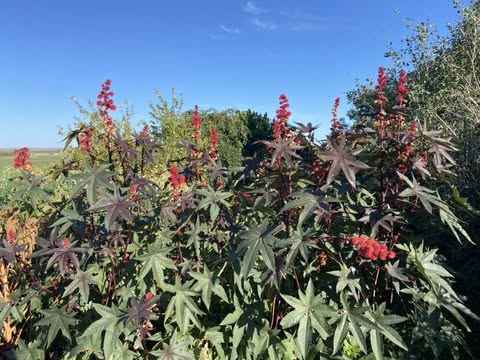
If you’ve ever seen a castor bean plant in its prime, you know it’s not shy. These plants can grow to the size of small trees in a single summer. Reaching 10 to 15 feet tall isn’t unusual. Their leaves are huge, often larger than a dinner plate. The color can be anything from shiny green to deep burgundy or bronze. They add an instant tropical feel, even in gardens far from the tropics.
The flowers themselves aren’t much to talk about, but the spiky red seed pods are striking and always get questions from visitors. That said, castor beans do come with a caution flag: every part of the plant is toxic, especially the seeds. It’s best grown where kids and pets won’t be tempted to explore too closely. Think of it as a “look but don’t touch” plant.
🌼 Senna (Cassia species)
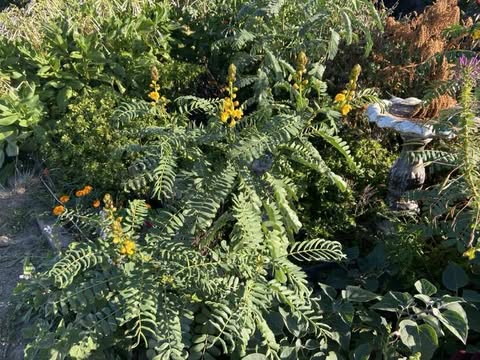
Where castor beans bring boldness, senna brings sunshine. These shrubs or small trees are absolutely smothered in golden-yellow blooms when in season, turning into bright beacons in the garden. They tend to bloom from late summer into fall, just when things are starting to look a little tired, and the pollinators are all over them.
The foliage is softer and airier than castor bean leaves, which makes a nice contrast. There’s also a rich history behind senna—it’s been used for centuries in herbal medicine as a natural laxative—but in the garden, most people just enjoy it for the color and the way it draws butterflies.
🌿 Why Grow Them Together?
Pairing castor beans with senna makes for an eye-catching combination. Imagine those massive, bold leaves of castor rising behind a cloud of golden senna blooms—the contrast of textures and colors is stunning. One plant brings drama, the other brings cheer. Together, they create a landscape that feels both exotic and welcoming.
So if you’re looking to add a little “wow factor” to your garden, consider planting castor beans for the bold backdrop and senna for the glowing yellow highlights. Just be ready for visitors to ask, “What are those?”—because these two rarely go unnoticed.