
🌌 Night Sky This Week: Through April 17th, 2026 🌠
Spring is definitely starting to make itself known in the night sky this week, and it’s a fun change to watch unfold. The evenings are getting longer, the air still has a bit of a chill, and the stars are slowly shifting into their new seasonal lineup. It’s that in-between time where winter hasn’t quite let go, but spring is clearly taking over. A perfect excuse is to step outside for a few minutes and just look up.
🌙 Evening Highlights
After sunset, one of the first things you’ll notice is Jupiter shining bright and steady. It’s high enough to catch your eye right away and sticks around for most of the evening before slowly dropping toward the western horizon. If you’ve got binoculars, take a quick look, you might spot its four largest moons lined up like tiny pinpoints of light.
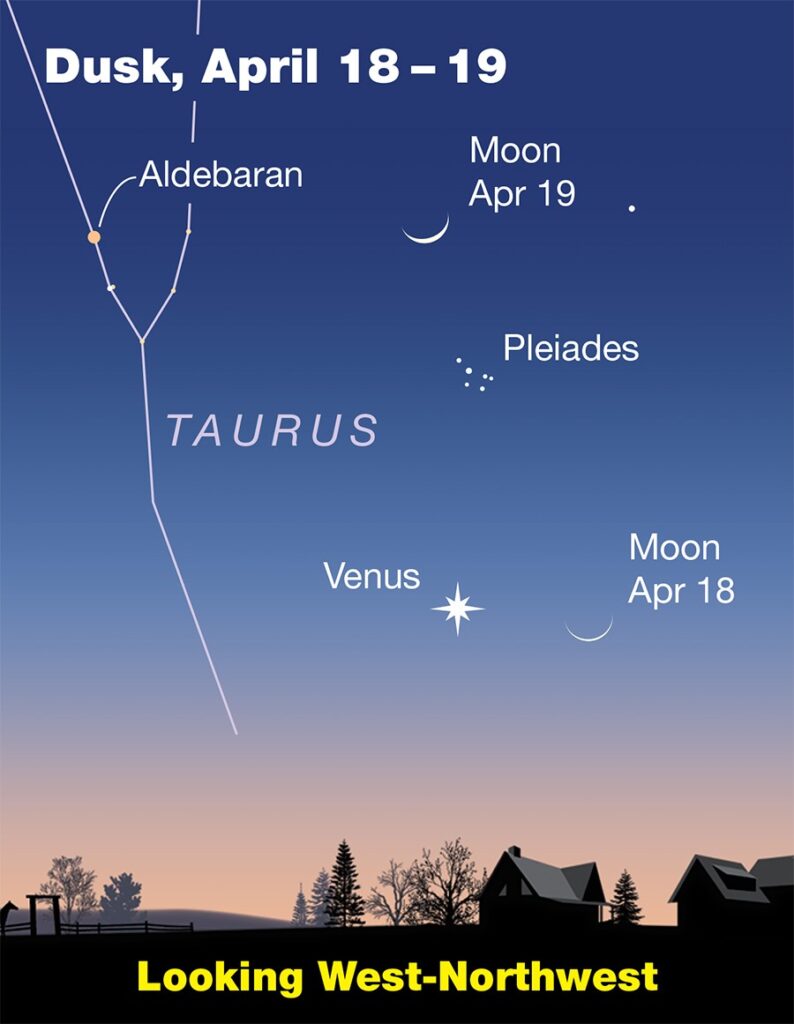
Low in the western sky, Venus is putting on a great show as well. It’s brilliant and hard to miss, often popping out before the rest of the stars. It sets a couple of hours after the Sun, so it’s a fun challenge to see how early you can pick it out in the fading twilight.
And if you’ve got a darker view to the west, you might even catch a faint glow stretching upward after sunset—that’s the zodiacal light, sometimes called “false dusk.” It’s subtle, but mid-April is one of the better times of year to see it.
🌅 Early Morning Highlights
If you’re up early (or just getting home late), a little something is waiting before sunrise, too.
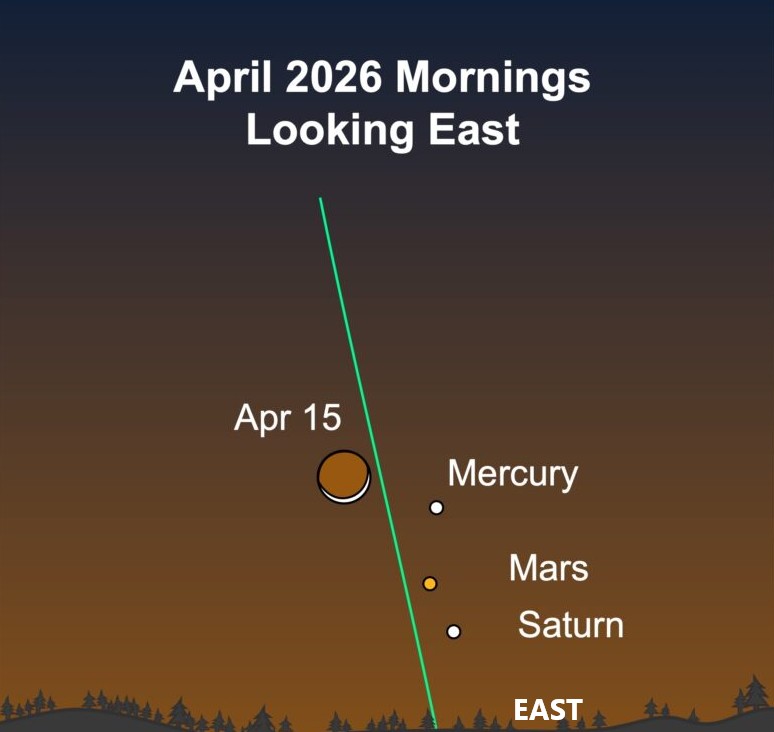
Mercury is starting to peek into the morning sky, though it stays very low near the horizon. You’ll need a clear view to the east and good timing, look about 45 minutes before sunrise. On April 15, the Moon will sit just above and to the left of it, which helps point the way.
Mars and Saturn are also beginning to creep back into view before sunrise. They’re still low and not easy to see yet, but in the coming weeks, they’ll become more noticeable before sunrise.
✨ Constellations in the Night Sky this Week
This is where things really show the seasonal shift.
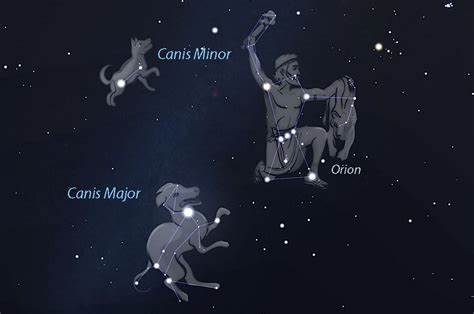
Look toward the southwest in the evening, and you’ll still catch the last of the winter constellations hanging on:
- Orion – The Hunter
Still easy to spot with its famous three-star belt. Betelgeuse glows with a reddish tint at one shoulder, while Rigel shines bright at the opposite foot. It’s one of the best “anchor” constellations for finding your way around the sky. - Canis Major – The Big Dog
Trailing behind Orion, this constellation is home to Sirius, the brightest star in the night sky. It tends to sparkle and flash colors, especially on crisp nights. - Canis Minor – The Little Dog
Smaller and simpler, marked by the bright star Procyon, sitting off to the side of Orion.
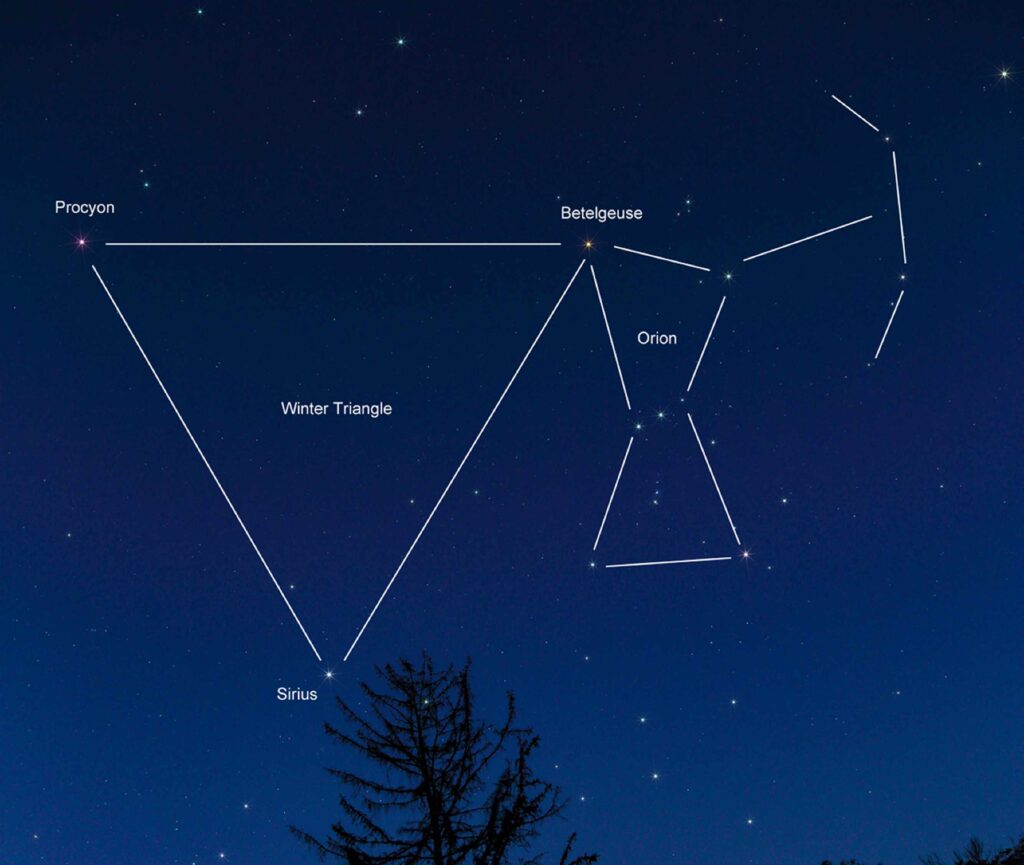
The Winter Triangle
Made up of Betelgeuse, Sirius, and Procyon, this large triangle is still visible after sunset—but it’s sliding west a little more each night as spring takes over.
One of the biggest changes you’ll notice this time of year isn’t just what you see, it’s how long you see it. Twilight is stretching out, and the sky takes its time getting fully dark. Evenings feel softer, slower, and a little more relaxed compared to winter’s quick drop into night.
It’s a subtle shift—but it’s one of the sure signs that spring has arrived. 🌱
5 comments for “”