
Whether you’re an early riser 🌅 or a night owl 🦉, the night sky this week has plenty of magic in store. From glowing planets to sparkling constellations, there’s always something worth a look. (Coffee optional ☕).
🌌 Evening & Night Sky
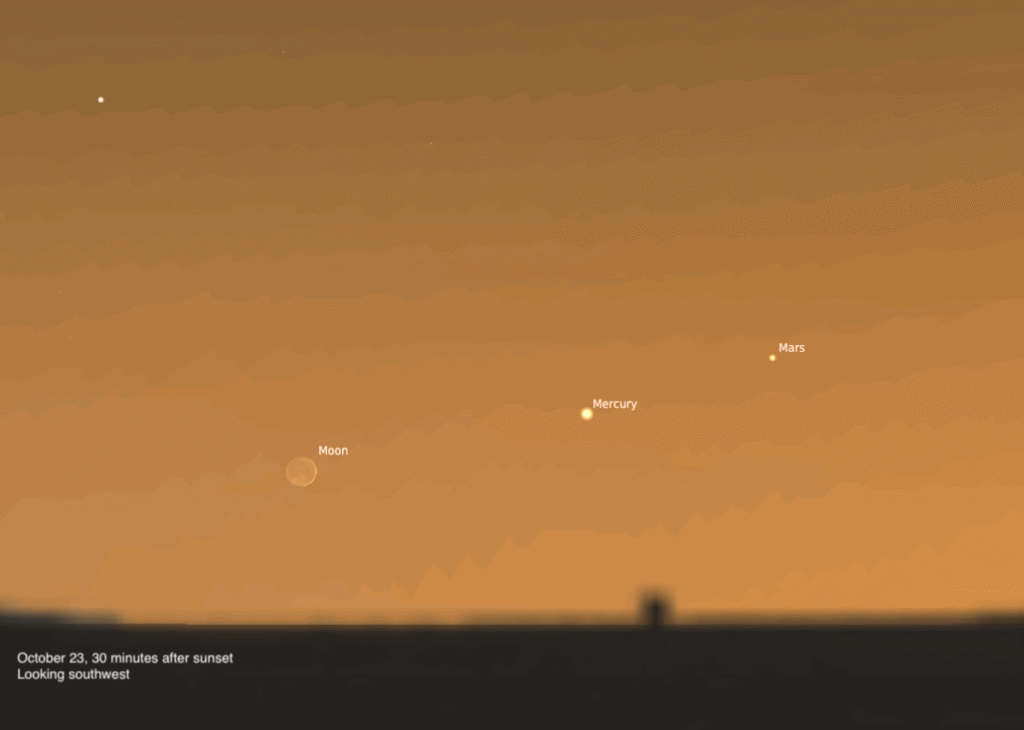
Just after sunset 🌆, look west to spot Mars 🔴 low in Virgo ♍. It sets only about 40 minutes after the sun, so you’ll need to catch it quickly! Binoculars 🔭 help bring out its faint red glow.
Mercury is also starting to peek above the horizon this week. Look for both Mars and Mercury about 30 minutes after sunset. Mercury will be the brighter of the two and sit just below Mars.
As Mars disappears in the west, Saturn 🪐 climbs into view in the east. By around 10 PM, Saturn shines high in the southeast in Pisces ♓, reaching its best view around midnight. Nearby, look for Fomalhaut, a bright southern star that’s easy to spot this time of year.
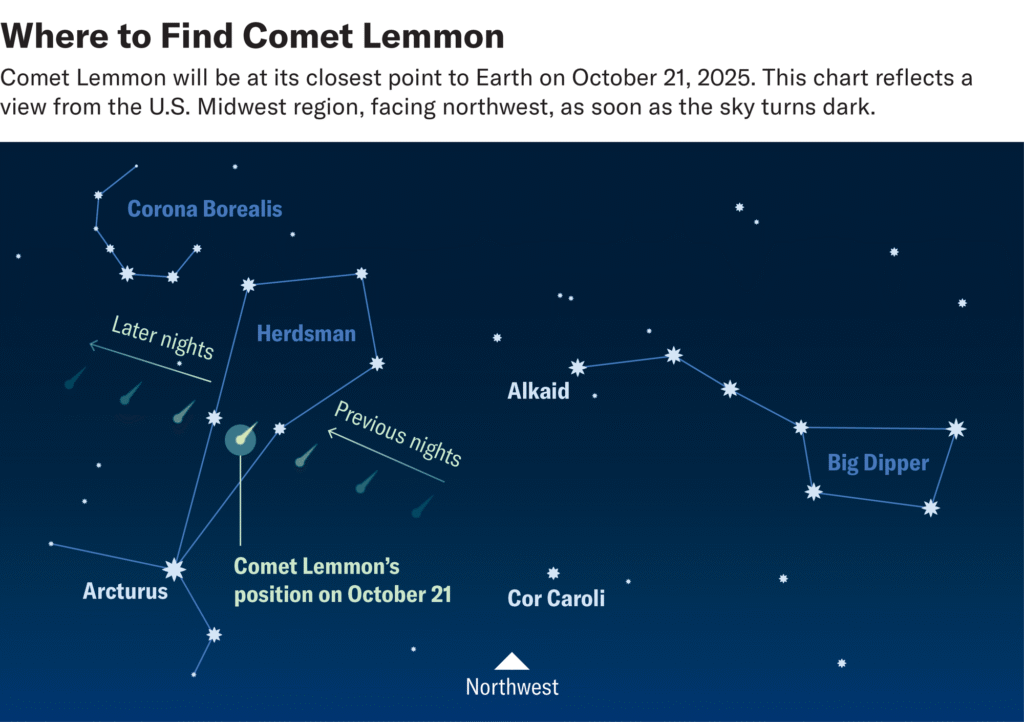
If you’re lucky, you can catch Comet Lemmon this week — faintly visible to the naked eye! Look for it to the upper right of Arcturus in the constellation Boötes.
✨ Morning Sky
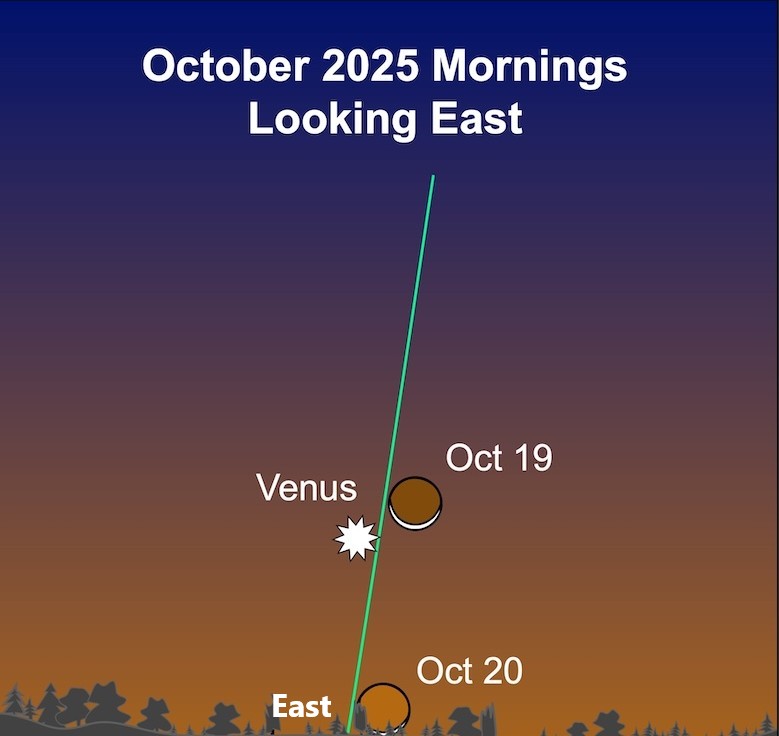
Early risers are rewarded with Venus 🌄, the brilliant Morning Star, glowing in Virgo. Around 7 AM, you’ll find it shining brightly due east until sunrise. On Sunday morning, a delicate crescent moon will hover just to its upper right. Venus is slowly sinking lower as the month goes on, so catch it while you can!
Nearby, Jupiter 🌠 gleams high in Gemini ♊ near the twin stars Pollux (golden 🟡) and Castor (blue-white 🔵). This time of year, Jupiter shows up in both the morning and the evening skies — about 45° above the eastern horizon in the morning, then rising again around midnight.
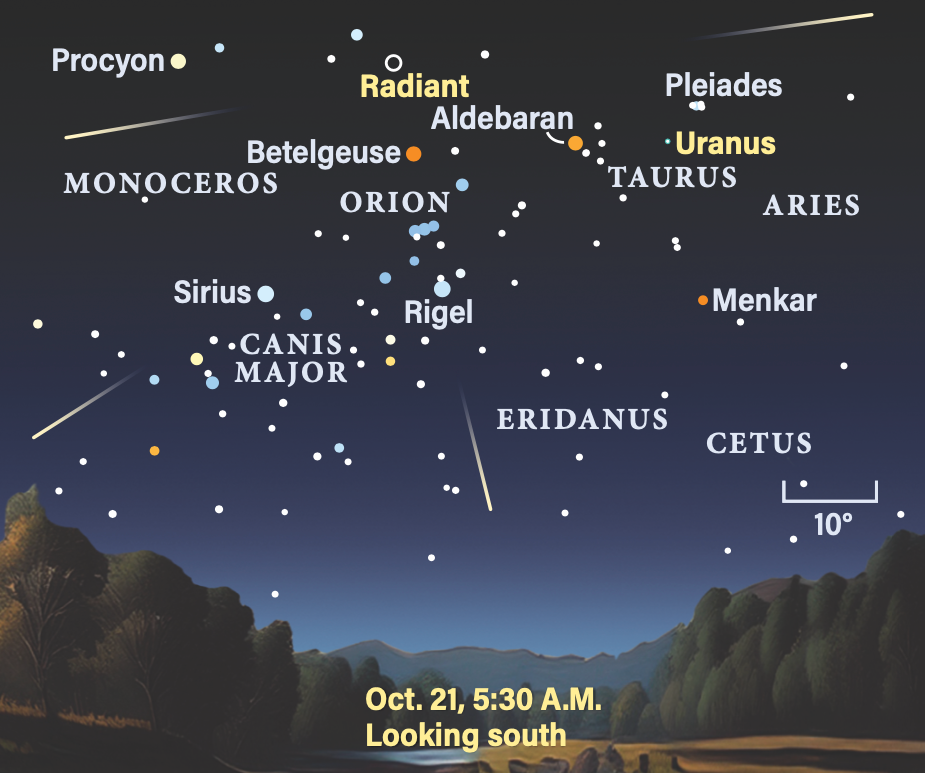
On Tuesday morning, look for the Orionid Meteor Shower 🌠. The winter constellations are making their return, with Orion front and center. The shower’s radiant point lies just above Betelgeuse (Beetle Juice 😉), Orion’s red shoulder star. Under dark skies, you might see up to 20 meteors per hour streaking through the night.
This week, it’ll also be easier to spot the green planet Uranus 🟢. As the winter constellations climb higher, find the Pleiades star cluster, then look just below and to the left to locate Uranus.
🌠 Constellations
And of course, the Dippers never disappoint! The Big Dipper sits low and level on the northern horizon. Draw a line from the two stars in its bowl, and you’ll land right on Polaris, the North Star ✨ — your steadfast celestial compass.
So grab a chair 🪑, step outside 🚪, and look up 👆 — the universe is putting on a free show this week!
5 comments for “Night Sky this Week Through October 24th”